Trail Shoes vs Road Shoes for UK Rucking: What's the Difference?
As an Amazon Associate we earn from qualifying purchases. Some links on this page are affiliate links, which means we may earn a small commission if you make a purchase.
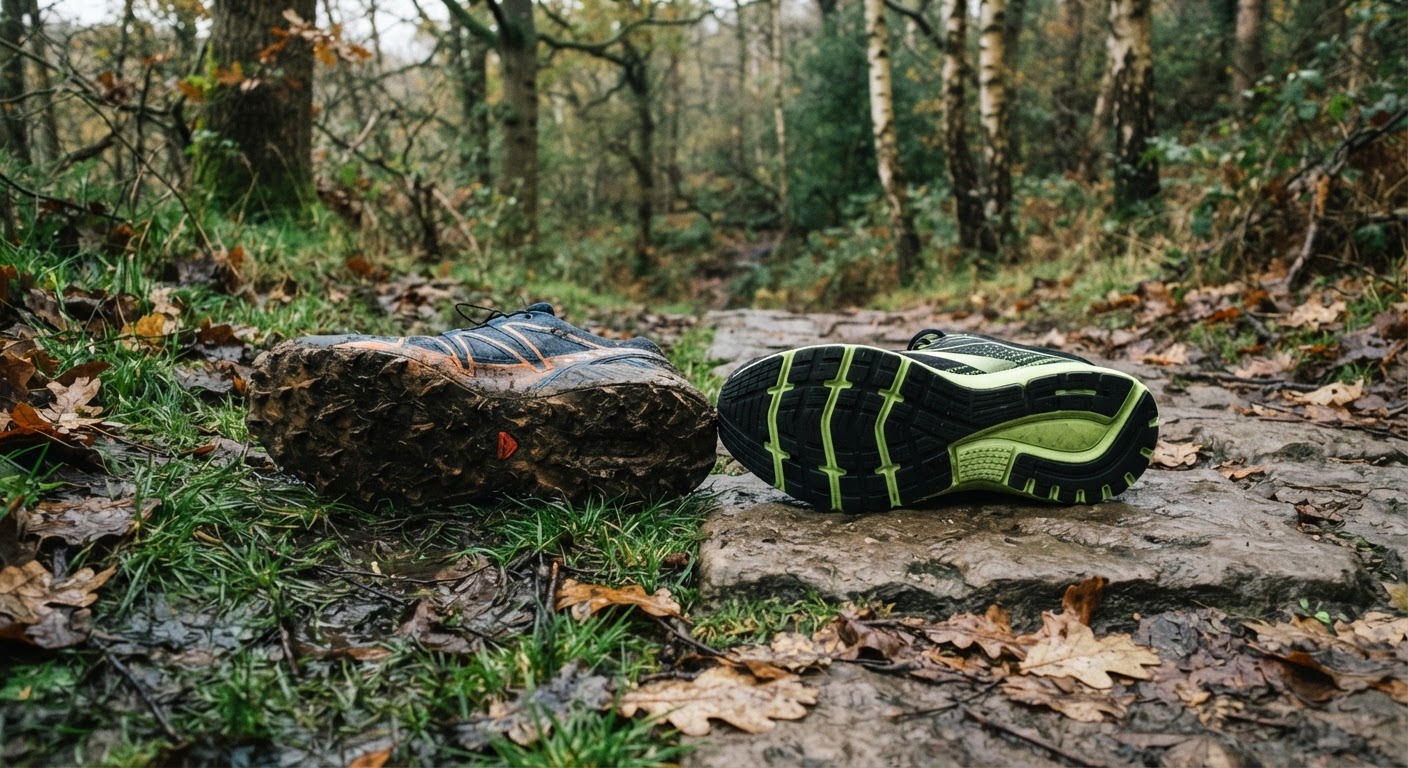
Turn a trail shoe and a road shoe upside down and the difference is obvious before you’ve read a single spec sheet: one outsole looks like a tractor tyre, the other close to bald by comparison. That’s not a styling choice—it’s the entire mechanical story of this comparison, condensed into a couple of millimetres of rubber. On dry pavement the gap barely registers. Load 15-20kg onto your back and run that same gap over wet grass or a slick gravel towpath, and it decides whether your foot holds its line or slides out from under you. Most buying guides skip straight to brand names without ever explaining what that rubber and the midsole underneath it are actually doing differently. The answer isn’t “just buy hiking boots”—it’s understanding the mechanics well enough to match the shoe to the surface rather than the marketing copy.
The Terrain Reality Check
UK rucking rarely means one surface. Even a straightforward route in the South Downs might take you from a paved car park onto a muddy path, across a wet grass field, and back onto a canal towpath with loose gravel. Road shoes handle that last surface fine; they handle the towpath adequately. But that wet grass is where they start to feel sketchy. When you’re carrying 15kg, a slip on wet grass doesn’t just mean a wobble. It means a twisted ankle with a weighted pack on top of you, and that’s a different class of problem from the same slip in trainers on an evening walk.
The terrain mix is the real issue. Most UK ruckers aren’t doing mountain trails every weekend—they’re mixing pavement with park paths and the occasional off-road section when conditions are soft. That mixed-surface reality is exactly where the outsole difference between a trail shoe and a road shoe becomes load-bearing.
The solution isn’t always “buy hiking boots.” Hiking boots are designed for sustained rugged terrain with heavy loads—they’re more shoe than most pavement-heavy ruckers need, and the extra weight and stiffness become a drawback on road sections. What helps is understanding the actual mechanical difference between trail and road shoes, so you can pick based on the terrain you’re actually doing rather than the terrain the brand assumes you’re doing.
The Mechanical Difference
The core distinction comes down to two physical features: outsole lug depth and midsole stiffness. The trade-off between them is what most buyers never get told.
Trail shoes have outsoles with lugs typically 4mm deep or more. These are designed to dig into soft ground—mud, wet grass, loose gravel—and provide lateral grip on uneven surfaces. Road shoes have shallow lugs, usually around 2mm. They’re efficient on flat, even ground but offer almost no purchase on anything soft or loose. Under load, that difference amplifies. A shoe that slips on wet grass unloaded will slip more reliably with 15kg on your back.
The second difference is the midsole. Trail shoes frequently include a rock plate—a thin rigid layer between the outsole and the cushioning that protects the bottom of your foot against sharp stones, roots, and uneven ground. This is genuinely useful on trails. The problem is that it also makes the shoe less flexible, which changes how it interacts with hard surfaces. On concrete or tarmac, a stiffer midsole transmits more impact through the shoe rather than absorbing it. The reduced flex under the forefoot can strain the plantar fascia—particularly on longer pavement walks where you’re getting repetitive impact with no give. That’s the trade-off the marketing copy doesn’t mention: the rock plate that protects your foot on trails can make your feet ache faster on roads.
Road shoes are built for the opposite conditions. Lighter weight, more flexible midsoles, and lower stack heights mean they absorb impact well on even surfaces and feel smoother on pavement. The catch is that without the rock plate and deeper lugs, they offer almost no protection or grip on anything off-road.
The practical outcome: trail shoes protect your feet better on trails but feel harsher on pavement, and their deeper lugs can wear down faster if you’re doing mostly concrete. Road shoes are comfortable on tarmac but leave you exposed on anything soft or uneven. For most UK ruckers—who are doing mixed terrain—neither is a universal winner.
On pricing, trail shoes typically sit somewhat above comparable road shoes—most trail models land in the £70–£200 range depending on spec. It’s not a massive premium, but it’s worth knowing before you pick based on a price comparison alone.
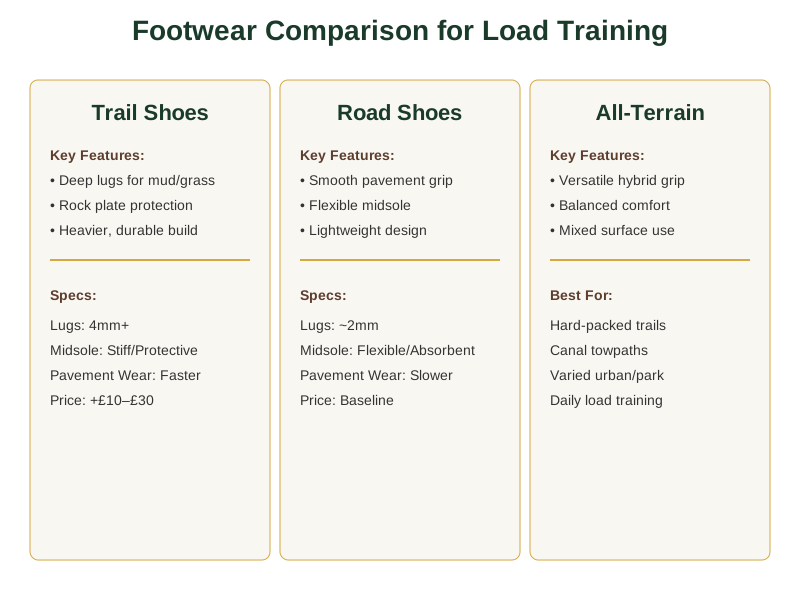
Side by side, the mechanical picture looks like this:
| Feature | Trail Shoes | Road Shoes |
|---|---|---|
| Outsole Lugs | 4mm+ (grip on mud/grass) | ~2mm (efficient on pavement) |
| Midsole | Stiffer with rock plate | Flexible, absorbs impact |
| Weight | Heavier | Lighter |
| Best For | Soft/uneven terrain | Flat, hard surfaces |
| Price Premium | Modestly above road | Baseline |
| Wear on Pavement | Faster | Slower |
When Trail Shoes Are the Right Call
If your regular routes include anything beyond flat pavement, trail shoes are the safer default. The terrain types that justify them are straightforward:
- Muddy or soft trails after rain
- Wet grass (the most common slip surface in UK parks and coastal paths)
- Loose gravel or stone paths
- Uneven or root-covered ground
- Canal towpaths after the gravel gets wet and compacted
What changes with load is the stakes. Off-road slip risk doesn’t scale linearly with weight—it jumps. With 10kg on your back, a wet-grass slip is a minor inconvenience. At 20kg, it becomes something you’d rather not explain to a GP. Trail shoes reduce that risk meaningfully on soft ground.
UK rucking communities consistently point to Hoka and Salomon as brands that work well for loaded trail use. The Hoka Speedgoat 7 (paid link) comes up frequently—reviewers report that the combination of high stack cushioning and reliable outsole grip handles mixed British terrain without feeling heavy. Salomon’s Speedcross is the preferred option specifically for mud-heavy routes—older versions ran narrow through the forefoot and held onto water rather than shedding it, but recent versions have widened the fit and improved drainage. Worth trying on either way if you’ve got wide feet or you’re crossing streams regularly.
Buy Hoka Speedgoat 7 on Amazon → (paid link)
If you’re training for a UK rucking event or doing routes with significant elevation change, trail shoes aren’t optional—they’re the minimum viable choice for staying stable under load on descents and loose ground.
When Road Shoes Make Sense
Road shoes are the right choice in a specific set of circumstances—and they’re worth choosing deliberately rather than defaulting to them out of habit.
If your rucks are primarily on pavement, city streets, or flat park paths with no soft ground, road shoes genuinely win on comfort. The lighter weight, more flexible midsole, and lower stack height all work in your favour on hard, even surfaces.
They’re also the better choice for shorter, lower-intensity sessions where you want a shoe that feels natural and efficient rather than protective. And if you have wider feet, road shoes are worth considering; many models offer a more accommodating fit than trail shoes, which tend to run narrower. The Merrell Speed Strike 2 GORE-TEX (paid link) comes up consistently for wide-footed buyers who want a roomier fit with waterproofing built in.
See it on Amazon → (paid link)
The honest caveat is this: owners who take road shoes off-road—even occasionally—consistently report faster outsole wear and a persistent feeling of instability on anything technical or wet. If your route has any soft ground at all, road shoes are a compromise you’re making on every step of that section.
The All-Terrain Trainer Option
If your routes span both road and trail, there’s a third category worth knowing about: all-terrain trainers. These are shoes designed to perform acceptably on both surfaces rather than excelling at one.
📺 Watch: The Truth About HOKA, Altra, Topo & La Sportiva on Trail — Extra Ultralight
The On Cloud is the model that defines this category in the UK market—buyers consistently praise its versatility and comfort across surfaces. The design doesn’t have the deep lugs of a dedicated trail shoe, but it has enough grip to handle damp grass and loose gravel without the pavement harshness of a stiff trail shoe.
The trade-off is real: all-terrain trainers won’t grip as well as trail shoes in deep mud, and they won’t feel as smooth as road shoes on long pavement stretches. But for the UK rucker whose routes genuinely mix both—and that’s most people—they’re the practical middle ground that prevents the faff of switching shoes based on the forecast.
The Hoka Clifton 10 (paid link) is worth considering if your use skews pavement-heavy. Reviewers consistently praise its plush cushioning for all-day comfort, and the smooth ride works well on road sections. But it’s not a trail shoe—owners who take it on muddy terrain report grip that doesn’t inspire confidence.
See Hoka Clifton 10 on Amazon → (paid link)
Frequently Asked Questions
Can I use road shoes for rucking?
Yes, but only if your routes stay on pavement, flat park paths, or hard-packed surfaces. The moment there’s wet grass, loose gravel, or anything uneven, road shoes offer less grip and less stability under load than trail shoes. If you’re unsure about your route, err on the side of trail shoes—they’re not wrong on pavement, but road shoes can be wrong on trail.
Are trail shoes better for rucking?
Generally, yes—because most UK rucking involves mixed terrain, and trail shoes handle that mixed terrain more safely. They provide better grip on soft ground, more protection against sharp objects underfoot, and a more stable platform when the surface isn’t cooperating. The only situation where road shoes clearly win is if you ruck exclusively on tarmac or flat hard paths.
How much more do trail shoes cost?
Trail shoes typically cost a bit more than a comparable road shoe, with most trail models sitting in the £70–£200 range depending on spec. The premium is modest for what you’re getting in protection and stability under load.
Do I need special socks for rucking?
Merino socks are worth the investment if you’re doing regular rucks, particularly in warmer weather or longer sessions. Cotton holds moisture, which softens skin and dramatically increases blister risk—particularly once you’ve added load and your feet are moving more inside the shoe. Darn Tough and Smartwool are the brands that come up most in UK owner reviews for durability and moisture-wicking performance.
Let the Route Choose the Shoe
The terrain tells you everything. If your routes include anything beyond flat pavement—and for most UK ruckers they do—trail shoes are the safer, more stable choice. They’re built for the conditions where a slip under load becomes a real problem, not just a wobble. Road shoes win on comfort, weight, and pavement efficiency, but they’re a gamble every time the surface gets soft or uneven.
For mixed-terrain UK ruckers, the practical starting point is an all-terrain trainer or a reliable trail shoe. Only specialise in road shoes if you’re certain your routes never leave tarmac—and if you want the fuller picture on footwear built specifically for heavier loads, What Shoes Survive a 20kg Ruck in the UK? covers that ground in more depth.
This is general guidance rather than a fitting service, so cross-check anything load-bearing against a proper fitting or a source like the British Mountaineering Council, Sport England or the NHS before you commit to a heavy training block. The shoes linked above are ones we recommend based on independent research and owner feedback.
Now you know what to look for—Get the Free First Ruck Gear Checklist to make sure the rest of your setup (pack, weight, socks) is as well-matched to your training as your shoes.