Rucking vs Weighted Vest Walking: Which Wins for Bone Density?

As an Amazon Associate we earn from qualifying purchases. This page contains affiliate links — if you buy through them, we earn a small commission at no extra cost to you.
Ask a rucksack loyalist and a weighted-vest owner which one is better for bone density and you’ll get two confident, contradictory answers — usually delivered with the certainty of someone who has never carried the other option. Neither of them is wrong, exactly. They’re each describing something real, just from a different mechanical starting point, and the argument mostly dissolves once you stop asking “which is better” and start asking “better for what.”
Bones respond to load-bearing activity by getting stronger, and adding consistent, progressive resistance to walking is a genuine, practical way to create that stimulus — bodies like the Royal Osteoporosis Society and the NHS support that much. What they don’t settle is the vest-versus-rucksack question, because that’s not really a medical question at all. It’s a mechanical one: how you carry the weight changes what happens through your spine, hips and shoulders with every step, and that’s a difference worth understanding on its own terms rather than borrowing someone else’s tribal loyalty.
This article works through that mechanical difference, what it means for your body over a session and over months, and which option is the honest answer for most people using weighted walking to support bone health. No medical claims, no invented statistics — just the reasoning that gets you to a call you won’t need to second-guess.
What Bone Loading Actually Does — and Doesn’t Do
Bones are living tissue. They respond to stress by remodelling themselves — laying down new bone in response to the forces placed through them. That is the mechanism that makes weight-bearing exercise a useful tool for bone health at any age. The National Institute on Aging notes that strength and resistance training builds muscle and bone simultaneously, which is why it’s consistently recommended alongside weight-bearing cardio for adults concerned about bone density as they age.
What the evidence doesn’t support is the idea that walking alone — even weighted walking — is a medical treatment for osteoporosis or osteopenia. The Royal Osteoporosis Society’s position is that exercise is one part of a broader approach that includes nutrition, medication where appropriate, and fall prevention. No piece of kit replaces that context. If you’ve been diagnosed with low bone density or are concerned about fracture risk, the first step is a conversation with your GP or a bone health specialist — not a purchase.
That said, for people who want to add a weighted walking practice to their routine as part of a sensible, long-term approach to strength and bone health, the question of how to carry the load is genuinely useful. That is where the vest versus rucksack question has a real, answerable difference worth understanding.
The Mechanical Difference: Fixed Load vs. Shifting Load
Here is the core of the practical distinction, and it’s a mechanical one rather than a medical one.
A weighted vest is designed to keep load fixed and centred against your torso. The weight sits across your chest and upper back, close to your body’s centre of gravity, and it moves with you — not independently. Every step applies a consistent, predictable force through your spine and hips. That consistency is the mechanical argument for why a vest is well-suited to bone-loading goals: the stimulus is steady, unchanging, and applied through the same pathways with every stride.
A rucksack works differently. Load sits in a pack on your back, and even with a well-fitted hip belt, there is a degree of movement — the pack shifts slightly with each stride depending on how tightly you’ve adjusted the straps and how you’ve packed the weight. The hip belt does meaningful work here: it transfers a portion of the load onto your hips rather than leaving it all on your shoulders, which is why pack fit matters so much for longer sessions. A rucksack with a quality hip belt can move a significant proportion of the load off your upper body entirely — which is excellent for comfort and endurance, but it also means less direct, consistent loading through the spine and hips compared to a vest.
Neither of these is a proven superior method for bone density specifically — the evidence on that question is too thin to call. What the mechanics tell you is that a vest provides a more consistent load stimulus, while a rucksack provides more variable load distribution with better hip support. Whether that consistency matters more to you than the comfort and load-sharing of a rucksack is the practical question.
The key mechanical difference in plain terms: a vest keeps weight fixed and centred, so your bones get a consistent signal with every step. A rucksack distributes load through your hips via the belt, which is better for comfort over distance but provides less consistent loading through the spine.
What Actually Decides the Choice: Session Length and Terrain
The bone-loading argument gives the vest a theoretical edge for consistency. But theory doesn’t pay your mortgage — consistency does. The method you’ll actually use week after week is the one that fits your life.
Session length is the most practical deciding factor. For sessions under 45 minutes — a typical 30-to-60-minute weighted walk — a vest is the more straightforward choice for bone-loading goals. The load is fixed, the setup is minimal (put it on, adjust the straps, go), and there is no pack shifting to manage. The consistent stimulus argument holds best at this session length because you’re not yet hitting the point where vest-borne load starts to feel punishing on your shoulders and upper back.
Once sessions stretch beyond 45 minutes, or if you’re planning longer weekend walks, the rucksack becomes the more practical option. The hip belt changes the load equation significantly: instead of carrying weight on your shoulders and through your torso, a well-adjusted hip belt transfers the load onto your hip girdle, which is structurally better equipped to handle it over distance. Add in the need to carry water, snacks, a layer, or a phone, and a rucksack starts to make obvious sense. A vest isn’t designed for that — and trying to use one as a substitute means either going without essentials or strapping them onto a vest not designed for it, which defeats the purpose.
Terrain matters too, though in a subtler way. On flat, even ground — a park, a canal towpath, a level trail — both methods work well. On undulating or technical terrain, a rucksack’s hip belt gives you better stability and load control as you navigate slopes and uneven ground. A vest keeps your weight centred, which helps with balance on rough ground, but it also means all the load sits on your upper body, which becomes more noticeable the more technical the terrain.
For most people building a weighted walking practice around bone health — three to four sessions a week, mix of shorter weekday walks and longer weekend routes — the honest answer is that a vest covers the majority of sessions and a rucksack is the right tool for the longer ones. If you already own a decent rucksack with a hip belt, there is no urgent need to buy a vest unless you’re doing shorter, more frequent sessions where the consistency argument for bone loading applies most cleanly.
Laid out side by side, the pattern is easy to check yourself against whatever your week actually looks like:
| Session Type | Best Option | Key Benefit |
|---|---|---|
| Under 45 mins | Weighted Vest | Consistent load stimulus |
| Over 45 mins | Rucksack | Hip belt load transfer |
| Technical Terrain | Rucksack | Stability and control |
| Flat, Even Ground | Both | Equal mechanical benefit |
| Carrying Essentials | Rucksack | Water, food, layers |
| Short, Frequent Walks | Weighted Vest | Simplicity and speed |
| Long Weekend Hikes | Rucksack | Comfort and endurance |
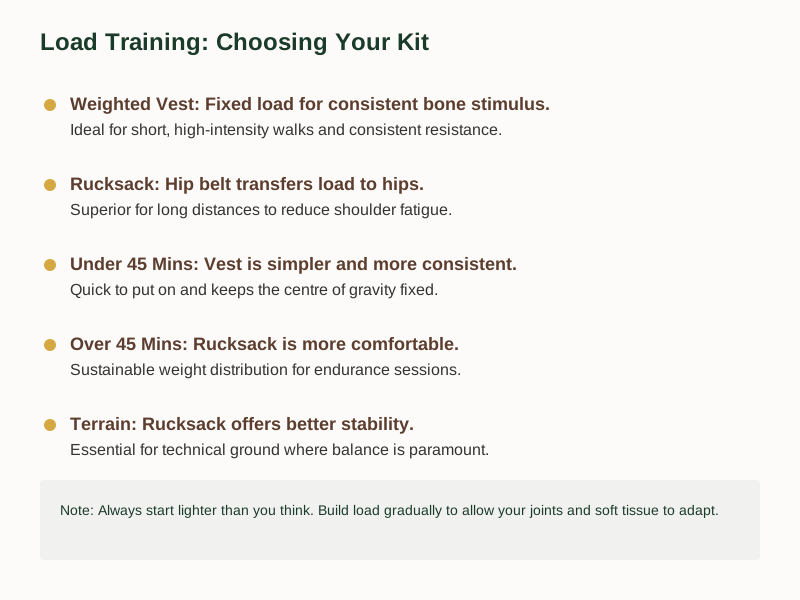
The Verdict: Session Length Decides It
Strip away the marketing and there’s really one number doing most of the work here, and everything else — terrain, kit-carrying, personal preference — is a modifier on top of it, not a competing factor of equal weight.
Under 45 minutes, pick the vest. For sessions in that bracket — where most people doing three to four weighted walks a week will spend most of their time — the fixed, centred load of a vest gives your bones a steady, repeatable signal with every step, and that consistency is the whole argument. The GORUCK Rucker (paid link), for instance, is designed to hold a ruck plate close to the upper back in a dedicated plate pocket, keeping the load high and stable rather than letting it settle toward the bottom of the pack — exactly the logic the vest argument depends on. Curved ruck plates from brands like GORUCK are shaped to sit flush against the back and resist shifting during movement, which is the opposite problem to what a rucksack has to manage.
Check price on Amazon → (paid link)
Past 45 minutes, the rucksack takes over — and the reason is the hip belt, not the bag itself. Once a session runs long, or you need to carry water, food, or extra layers, a rucksack with a proper hip belt becomes the only sensible option, because it moves load off your shoulders and onto your hip girdle in a way a vest structurally cannot. Owners of packs like the GORUCK GR1 report that the break-in period is real, but once the shoulder straps soften, the pack becomes genuinely comfortable for extended carry — and the lack of a built-in waist belt on the GR1 is worth noting if you’re planning to use it specifically for loaded walking rather than general EDC use, since you’d need to add one separately to get that hip-transfer benefit.
Terrain and load-carrying can nudge you off the 45-minute line in either direction, but they don’t replace it: technical ground makes the rucksack’s stability argument stronger even on a shorter walk, and a short, kit-free session on flat ground is the one place a vest keeps its edge regardless of anything else. Outside those edge cases, the session-length threshold is doing almost all the deciding.
The practical call: for most people using weighted walking to support bone health, start with a weighted vest. It is the more consistent bone-loading tool for shorter sessions, it is simpler to use, and it removes the variables that come with pack fit and strap adjustment. Once your sessions cross the 45-minute mark, or you want one kit that does everything including carrying your water and snacks, a rucksack with a quality hip belt becomes the better investment — and at that point the bone-loading argument stops being the deciding factor anyway, because load distribution and sustainability matter more than absolute consistency once you’re out there for an hour or more.
One caveat worth naming directly: many weighted vests on the market are designed around a male body shape, so the shoulder spacing, chest cut, and overall fit can be genuinely poor for women. If you’re a woman trying a weighted vest for the first time and it feels awkward or uncomfortable across the shoulders, that’s usually a fit problem, not a “you’ll get used to it” problem. Look for adjustable shoulder straps and chest bands, or a specifically female-fit option — a poorly fitting vest puts more people off weighted walking than the exercise itself ever does.
Where Bone Density Fits In: The Honest Frame
It is worth stepping back to name what this article can and can’t tell you. The bone density angle is the reason many people searching for this comparison arrive here, and it is also the angle most likely to be oversold by the gear marketing around weighted vests and rucking.
What the evidence supports: weighted, load-bearing walking is a form of resistance exercise that places force through your bones, which is the mechanism by which bones respond and strengthen. The ROS and NHS position is that weight-bearing exercise is a useful component of a bone-healthy lifestyle, alongside resistance training, balance work, and adequate calcium and vitamin D. That is a meaningful endorsement — it is not fringe or experimental — but it is not “this will improve your T-score” either.
What the evidence doesn’t support: walking alone, even with added weight, as a standalone treatment for diagnosed osteoporosis or osteopenia. If you have a bone density diagnosis or a clinically assessed fracture risk, the right first step is a conversation with your GP or a bone health specialist. Weighted walking may well be part of what they recommend, but the medical context needs to come first.
For everyone else — people who want to build a sensible, long-term weighted walking practice as part of staying strong and active as they age — the practical question is less “which method is medically better for my bones” and more “which method will I actually stick with.” Consistency over months and years beats theoretical optimisation over weeks. A vest that fits well and a rucksack with a comfortable hip belt both do the job. The one you’ll reach for every Tuesday morning is the one worth owning.
Now you know what to look for — and why the mechanics of how you carry weight matters as much as the weight itself. If you’re ready to see what gear actually supports a consistent weighted walking practice, the free checklist breaks down exactly what you need and what you can skip.
Frequently Asked Questions
Can weighted walking actually improve bone density?
Weighted walking places load-bearing stress through your spine and hips, which is the mechanism by which bones respond and strengthen. The Royal Osteoporosis Society and NHS include weight-bearing exercise as part of a bone-healthy lifestyle. However, walking alone — even weighted — is not a standalone medical treatment for diagnosed osteoporosis or osteopenia. If you have a bone density diagnosis, speak to your GP before starting a weighted walking practice.
Is a weighted vest better than a rucksack for bone density?
For shorter sessions under 45 minutes, a weighted vest provides a more consistent load stimulus — the weight stays fixed and centred, so your bones receive the same signal with every step. For longer sessions where you’re also carrying water, food, or layers, a rucksack with a quality hip belt is more comfortable and sustainable, and the hip belt’s load-sharing actually reduces the direct loading through your spine. Neither is proven superior for bone density specifically; the practical difference is consistency versus comfort.
How heavy should I go for bone health?
Start lighter than you think — a common rule of thumb among trainers and rucking guides is 5 to 10 percent of your body weight, built up gradually over weeks. That specific figure isn’t something the ROS or NHS prescribe, but their broader position — progressive loading rather than starting heavy — points the same way. Jumping to a heavy load quickly is how most beginners end up with joint discomfort or altered gait, which undermines the bone-loading benefit.
Do I need to buy a weighted vest if I already have a rucksack?
Not necessarily. If your rucksack has a quality hip belt and you can achieve a comfortable, stable fit, it is a perfectly capable tool for weighted walking. The case for a vest is strongest if your sessions are consistently under 45 minutes and you want the fixed, centred load for bone-loading consistency. If your sessions tend longer, or you need to carry additional kit, the rucksack is already doing the job.
I keep seeing claims that weighted vests “reverse osteoporosis” — is that real?
No. That claim is not supported by the evidence available. Weighted walking is a useful form of load-bearing exercise, and bones do respond to consistent loading by remodelling — but the claim that a weighted vest can reverse a diagnosed bone density condition is a marketing claim, not a medical one. The ROS and NHS position is that exercise is one component of a broader bone-health strategy. If you have osteoporosis or osteopenia, get proper medical guidance before relying on any exercise modality alone.
Worth Checking Yourself
None of this needs to be taken on trust. For the wider evidence base behind the bone-density claims made throughout this article, What UK Guidance Says About Weighted Training for Bone Density covers the NHS and ROS position in full. The specific sources referenced above are the Royal Osteoporosis Society, the NHS, and the National Institute on Aging — worth reading directly rather than taking anyone’s summary of them, this one included.
As an Amazon Associate we earn from qualifying purchases. The products linked above are ones we recommend based on independent research and owner feedback.
This article is general guidance, not medical advice — if you have a bone density diagnosis or a fracture history, the right next step is your GP or a bone health specialist, not a gear review.