How to Ruck in UK Weather (Without Getting Soaked)
As an Amazon Associate we earn from qualifying purchases. Some links on this page are affiliate links, which means we may earn a small commission if you make a purchase.
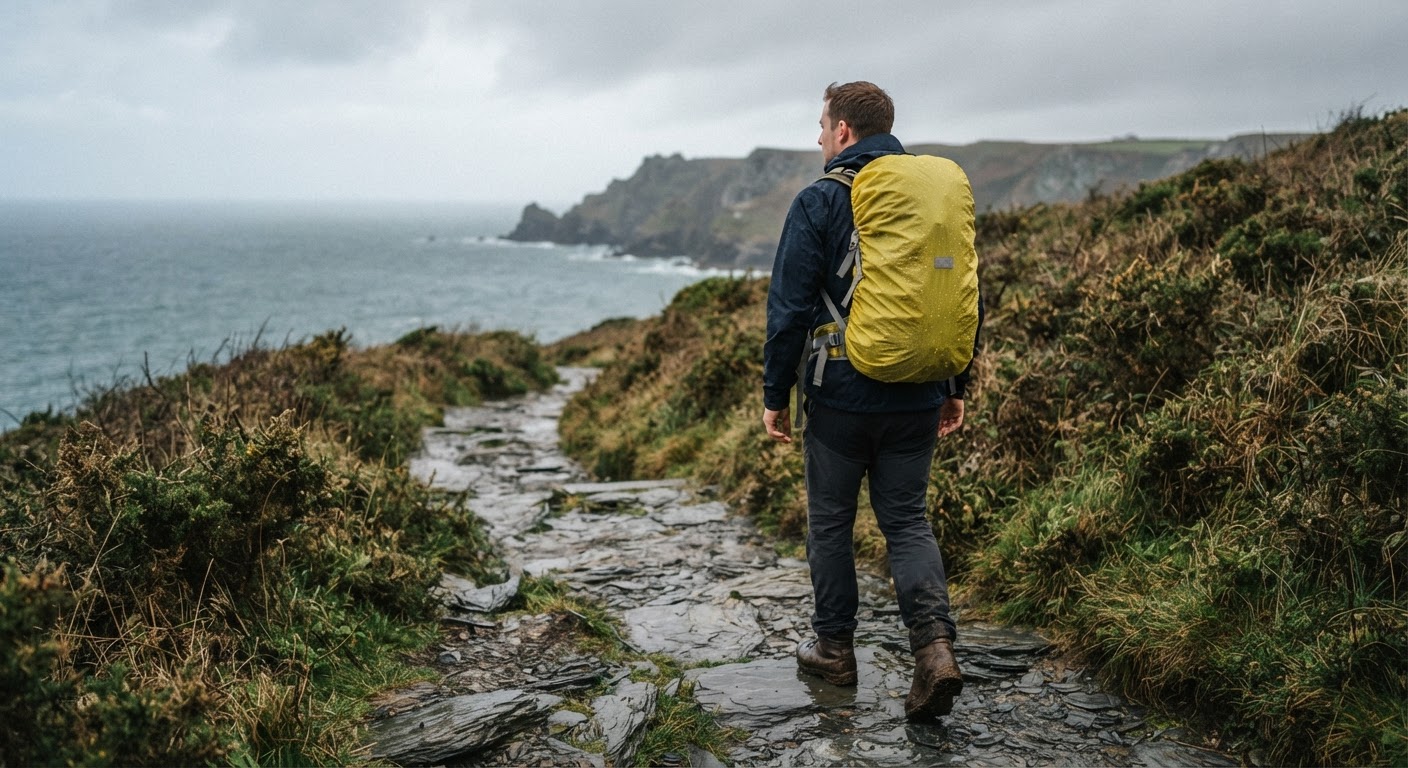
You’re halfway through a coastal ruck, the kind of grey British afternoon where the sky looks like it’s been left on simmer. The rain comes in sideways, the sort that finds every gap in your collar and your pack. By the time you stop, your socks are squelching, there’s a hot patch forming at your inner thigh, and the contents of your pack smell like a damp dog. That’s not bad luck — that’s a gear system failure, and it was preventable.
Most ruckers blame the rain. The honest answer is the waterproofing strategy was incomplete from the start.
The Two-Layer Protection Rule
Here’s the thing nobody tells beginners: a “waterproof” rucksack is not the same as keeping your kit dry in a proper UK downpour. The double-sided TPU coating that makes a commercial waterproof backpack effective is genuinely good at stopping water from outside — but zips and seams are where most failures happen, and under load, when the pack flexes with every step, those stress points get worse. UK-facing reviews consistently flag this: “water-resistant” packs let moisture in through the zipper track and the stitching, particularly on longer routes where you’re walking for hours in sustained rain.
The two-layer rule is simple. Layer 1 protects your body — your feet, your legs, your base layers. Layer 2 protects your pack contents. Most people spend all their budget on Layer 2 and treat Layer 1 as an afterthought. That’s backwards.
Wet feet are the actual failure point, not a damp phone. Wet fabric against skin for two hours is how blisters start and how chafing becomes a multi-day misery. The pack can be bone dry and your ruck still ruined because you’re limping home with raw heels.
So the system is: breathable waterproof shell for your body, secondary barrier (dry bag or liner) for your pack contents, and a pack shell that does its job without being the only thing standing between your gear and the weather. Not sure where to start? Get the Free First Ruck Gear Checklist to see what a complete two-layer setup looks like.
The mental model to hold onto: treat your pack shell like the outer wall of a house. It’s useful, but you wouldn’t rely on it alone in a flood. You want insurance on both sides.
Waterproof Backpacks vs. General Hiking Packs
This is where the trade-off gets real. Waterproof backpacks win on barrier integrity — the materials and construction are built to keep water out, and they do it well. General hiking and rucking packs win on comfort and ergonomic design, because they’re built for freedom of movement over extended periods, not just weather resistance.
📺 Watch: Waterproof Rucksack with Wet Weather Bag — Pousinboots
Neither is universally better — it’s barrier integrity against comfort, and the right side of that trade-off depends entirely on how you’re using the pack.
Here’s how that trade-off plays out in practice:
One-off hard jobs or high-cost-of-failure situations — a mountain route in winter, a multi-hour coastal walk when the forecast is grim, anything where wet gear means more than just discomfort. Go waterproof. The double-sided TPU coating and abrasion-resistant 420D nylon construction genuinely holds up under load and exposure. Yes, they’re heavier and stiffer, and the material is more or less indestructible rather than lightweight — but in this scenario, that’s the right trade-off.
Repeat everyday use — you’re rucking two or three times a week, probably in mixed conditions, often shorter sessions. Go general hiking or rucking pack. The ergonomic design and freedom of movement matter more over that frequency, and you can compensate for the less robust waterproofing with a rain cover or a dry bag inside. The GORUCK GR1 is the obvious premium option here — owners consistently praise its “bomb proof” construction and the fact that after a proper break-in period, it’s genuinely comfortable under load. The break-in is real though; the shoulder straps feel stiff initially, and there’s no built-in waist belt, which matters if you’re carrying serious weight regularly. If that’s too much spend, a solid general hiking pack with a rain cover does the job for a fraction of the price.
Tight budget or light use — planning and weather checks reduce the need for expensive specialised gear significantly. Check the forecast, choose your route accordingly, and a mid-range pack with a dry bag handles most situations fine.
The Karrimor SF Predator 30 comes up a lot in UK discussions as a capable middle ground — the modular layout is genuinely useful for adding kit as needed, and owners report it’s comfortable under load. The stitching finish isn’t as refined as premium rivals, and the 30-litre capacity feels tight if you need to carry warm layers, food, and bushcraft kit for longer trips. For a day ruck, it’s worth its salt. For an overnight, look elsewhere.
The flip: if your specific activity involves gear-intensive expeditions — you’re carrying shelter, cooking kit, extra layers — the streamlined design of a purpose-built rucking pack starts to matter less, and a fully featured general pack serves you better.
The Body Layer: Boots, Socks, and Shells
This is where most ruckers underspend and pay for it later. The body layer is the one that determines whether you finish a ruck feeling strong or limping.
📺 Watch: How To Treat A Blister Correctly (First, Look At Your Blister Roof) — Blister Prevention
Boots vs. trainers is the first decision. For wet UK conditions, waterproof boots are the safer call, but they need to fit properly under load — and that’s the catch. Boots that fit fine empty can feel narrow and constrictive once you’re carrying real weight, because the load compresses your foot and changes the pressure points. Community observations from UK ruckers and hikers consistently flag the narrow-fit problem under load as the main complaint with waterproof boots. Break them in properly before a long ruck: a few short walks with the pack loaded will show you where the pressure points are before you’re two hours from home.
If you’re in trail trainers, the Salomon Speedcross Peak (paid link) has excellent traction in mud and soft ground — genuinely one of the best options for UK terrain, where a wet field or muddy path is more likely than a hard rock trail. The trade-off is that it runs warm, doesn’t breathe or drain brilliantly, and can feel heavy on firm ground. For a dedicated rucking shoe on mixed terrain, the Hoka Speedgoat 7 (paid link) offers better all-day cushioning and a more stable ride, though the toe box can feel wide and it struggles in very muddy conditions.
Buy Hoka Speedgoat 7 on Amazon → (paid link)
Check price on Amazon → (paid link)
Socks matter more than people expect. Cotton holds moisture, and wet cotton against skin is exactly the friction setup that creates blisters. Merino wool wicks moisture away from the foot and stays warm even when damp — that’s the mechanism that makes it worth the extra cost per pair. The Darn Tough Run (paid link) is consistently praised for durability and a snug, non-slipping fit, though the minimalist feel isn’t for everyone and some owners find the toe box tight. Decathlon’s merino running socks are the honest budget pick — they don’t have the same durability over many washes, but for warmth and reduced chafing in cold, wet conditions, they perform well for a fraction of the price.
Buy Darn Tough Run on Amazon → (paid link)
Shells — your outer layer. Premium rain gear is often used in the UK because ordinary waterproofs fail in sustained rain, and this comes up repeatedly in UK hiking and rucking communities. The mechanism is straightforward: sustained rain tests the hydrostatic head rating of the fabric, and cheaper membranes delaminate or wet out faster. A decent waterproof-breathable jacket (something with a proper membrane, not just a DWR coating) is worth the investment if you’re rucking year-round. Breathability matters too — if you’re sweating inside a non-breathable shell, you’re creating the same wet-fabric problem from the other direction.
Winter-Specific Planning and Behavioural Tactics
Gear only gets you so far. Planning is the other half of staying safe and consistent in UK winter conditions.
Check the forecast before you head out — and not just the temperature. Wind speed, precipitation type, and visibility matter equally. UK mountain weather can change rapidly, and conditions that would breach the waterproofing of any kit are worth knowing about before you’re on the hill. A quick Met Office check takes two minutes and could be the difference between a good ruck and a call to mountain rescue.
Route selection matters more in winter. Choose well-marked paths or routes you’re confident navigating with GPS, particularly in areas where snow or fog could reduce visibility significantly. Getting lost in poor conditions is a failure mode that’s entirely preventable with planning. If you’re new to a route, walk it in good weather first before attempting it with load and in questionable conditions.
Timing is critical. Start early enough to finish before dusk, when temperatures drop and visibility worsens. In winter, that means finishing by mid-afternoon in many parts of the UK. Rucking in the dark on unfamiliar terrain with a heavy pack is not where you want to discover your headtorch is in the car.
Safety — avoid heading out if blizzard conditions or severe weather warnings are in effect. No kit is worth pushing through conditions that would challenge experienced mountaineers. The goal is consistent training over time, not hero runs that end in injury or evacuation.
Frequently Asked Questions
Do I really need a waterproof backpack, or will a rain cover work?
A rain cover is better than nothing, but it doesn’t protect the contents from water that seeps in through zips and seams — and under load, that’s where most failures happen. For one-off hard jobs or high-cost-of-failure scenarios, a waterproof backpack is the safer choice. For everyday training, a general pack with a rain cover and a dry bag inside is usually sufficient.
What’s the best sock for wet UK weather?
Merino wool is the best choice for moisture-wicking and warmth. Look for a durable pair that stays in place — the Darn Tough Run (paid link) is consistently praised for its non-slipping fit, though it comes with a premium price tag. Decathlon’s merino running socks are the honest budget alternative: not as durable over many washes, but they do the job well for cold, wet conditions.
Can I ruck in normal trainers if it’s raining?
You can, but your feet will get wet and cold, which increases the risk of blisters and chafing. Waterproof boots or trail shoes with good grip are recommended for wet conditions — the Salomon Speedcross Peak (paid link) is a strong option for mud and soft ground, while the Hoka Speedgoat 7 (paid link) handles mixed terrain with more cushioning.
Two Layers, Not One Purchase
The two-layer protection rule is the one thing to take away from this: your pack shell is the first line of defence, not the only one. Protect your body with the right boots, socks, and shells, and protect your contents with a dry bag or liner. That system handles anything a British winter throws at it.
Waterproof backpacks win on barrier integrity; general packs win on comfort and ergonomics. The right call is scenario-dependent — one-off hard jobs warrant the premium waterproof option, everyday training is better served by a comfortable general pack with secondary protection.
The goal is consistency, not perfection. You don’t need the most expensive kit. You need the right system. For the fuller picture on terrain and event-day planning, see Rucking in the UK: Terrain, Weather, and Event Guide; the forecasting and access guidance referenced above comes from the Met Office, Mountaineering Scotland, and the British Mountaineering Council.
Now you know what to look for — Get the Free First Ruck Gear Checklist to see the complete starter kit for building a reliable rucking habit, whatever the UK weather decides to do.
As an Amazon Associate we earn from qualifying purchases. The kit linked above is gear we recommend based on independent research and owner feedback.