Why Rucking Gives You Blisters (and Which Socks Actually Fix It)
As an Amazon Associate we earn from qualifying purchases. Some links on this page are affiliate links, which means we may earn a small commission if you make a purchase.
The average rucker’s sock drawer tells its own story: two or three pairs bought in quick succession, each one meant to fix a blister the last pair didn’t. Cheap socks get blamed first, then “bad feet,” then the boots. None of those are the actual cause. A ruck blister is a mechanical problem with a mechanical solution, and once you understand what’s happening under load, picking the right sock system stops being guesswork.
The Mechanism of a Ruck Blister
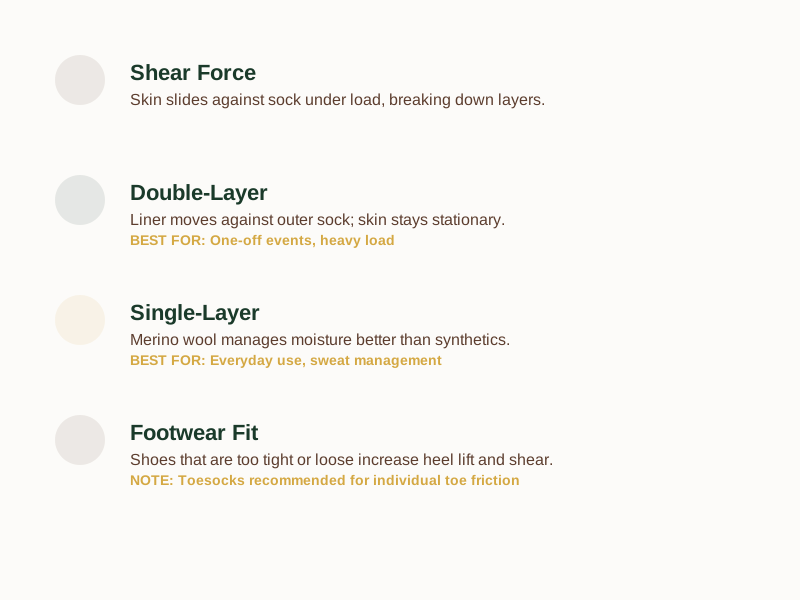
The cause of blisters under load isn’t just friction in the way most people mean it. It’s shear—the sliding of one layer against another under repeated pressure. Under load, your foot flattens and lengthens slightly, and the heel lifts more with each step than it would unloaded. That extra movement means your skin is sliding against the inside of your sock, hundreds of times per mile. Rubbing wet skin with sandpaper provides a fair picture of what’s happening at a cellular level. Moisture and heat soften the skin, repeated shear breaks down the layers, and a blister forms.
What makes this worse on a ruck compared to a normal walk is the weight. More load means more ground reaction force, which means more heel lift, which means more shear per step. A 15-mile ruck at 20kg is a very different mechanical proposition to a 15-mile walk with no pack.
This is also why the standard advice to “just wear better socks” is incomplete. The fabric matters, but what matters more is whether skin is moving against fabric, or fabric is moving against fabric. A liner-plus-outer sock system changes which surfaces are sliding. The two layers move against each other; skin stays against the stationary inner liner. That is the mechanism that actually stops blisters from forming under load. See our honest guide to starting rucking for more on how load changes walking mechanics.
The Three Sock Systems
There are three main approaches, each doing the job differently.
📺 Watch: Injinji Socks for blister prevention — Blisterhelp
Single-layer socks—traditional synthetic or Merino wool—sit directly against your skin. Merino wool wins here because it manages moisture better than synthetic fabric, keeping skin drier and less prone to softening. The common gripe with synthetic single socks on longer rucks is exactly this: once feet sweat on a warm day, the fabric holds moisture against the skin and the shear does its damage.
Double-layer socks—a thin inner liner with a thicker outer sock—work on a different principle. The inner sock forms a low-friction interface against the skin, and the outer sock moves against the liner rather than the skin. This mechanism directly reduces shear force. The double-layer construction also adds durability for repeated load-bearing. The trade-off is warmth: on summer UK coastal paths, where the temperature can swing mid-walk, that extra layer can turn uncomfortable fast. The commercial guidance from ArmaSkin notes that double-layer socks are among the most effective interventions for friction blister prevention on load-bearing walks.
Toesocks—individual compartments for each toe—eliminate skin-on-skin friction entirely, a primary cause of blisters between the toes. Each toe pocket wicks moisture independently. However, the construction is less proven under sustained heavy load; owners who use them for rucking regularly report that the toe compartments can shift and bunch under the repeated heel-strike of a weighted march. For short distances or trail running under load, they are worth considering. For a full day at 20kg+, most experienced ruckers return to a conventional sock system.
Here’s how the three stack up side by side:
| System | Mechanism | Moisture Management | Best For |
|---|---|---|---|
| Single-Layer (Merino) | Skin moves against fabric | Excellent | Everyday use, sweat management |
| Double-Layer | Liner moves against outer sock; skin stays still | Moderate (can run warm) | One-off events, heavy load |
| Toesocks | Individual compartments prevent toe-to-toe friction | Good (independent wicking) | Short distances, trail running |
The Verdict: Which Sock System Should You Buy?
There’s no single “best” sock system—there’s a best system for what you’re about to do. Three scenarios cover most ruckers.
If it’s a one-off hard job—an event, a charity ruck, a long-distance challenge—the pain and disruption of a blister mid-route is a high price to pay. Double-layer socks are the safer call here. The hydrophobic liner reduces skin-sock friction directly, which is the mechanism that matters most under sustained load.
For repeat everyday use, Merino wool socks are the better pick. They manage sweat and rain moisture better than synthetic single-layer socks, keeping skin in better condition over time, and they last well under repeated washing. The durability of a Merino single sock—like Darn Tough Run (paid link), which comes backed by Darn Tough’s unconditional lifetime guarantee against wearing out—means you aren’t replacing them every few months.
Check price on Amazon → (paid link)
The one situation where that changes: if you find moisture building up in the liner of a double-layer system during a long ruck, the skin can macerate. If you’ve had that issue, the moisture management of a good Merino single sock is likely the better answer.
Most UK ruckers who do this twice a week or more will get more value from a solid Merino sock than from a double-layer system they might only need a few times a year. For those occasional events, it’s worth packing the liner.
Now you know what to look for—Get the Free First Ruck Gear Checklist.
Beyond Socks: The Full Foot Care System
Socks are the biggest variable, but footwear fit is just as important. Shoes that are too tight restrict the foot’s natural movement under load, creating hot spots at the toe box and heel counter—the exact points where the foot is most dynamic. Shoes that are too loose let the foot slide forward on each step, increasing heel lift and shear. Getting this right matters more for rucking than for unloaded walking, because load amplifies every fit issue.
📺 Watch: Blister taping toes heel and ball of foot — The Physio Channel
Leukotape over a suspected pressure point before a long ruck can buy you a few extra miles. But taping is a band-aid, not a fix. The fix is the sock system plus correct footwear fit. See our guide to trail shoes versus road shoes for rucking for what to look for in a shoe that handles load well.
GORUCK’s foot care guidance is blunt about this: preventive maintenance is always easier than treating an existing blister. Check your feet at the halfway point of any long ruck—if there’s a hot spot developing, addressing it then with a dressing is far better than trying to finish the route with a full blister.
A quick checklist before any weighted walk:
- Sock system matched to the distance and conditions
- Shoes laced correctly—not too tight at the midfoot, heel locked
- Hot spots taped before you set off if you know your problem areas
- Feet checked at halfway on anything over 10 miles
Most blister problems trace back to one of three things: socks that can’t manage moisture, shoes that don’t match the terrain, or load that’s sitting too low in the pack and letting the feet slide forward. Sort those three and you’re sorted.
Get the gear right and your feet will hold up—Get the Free First Ruck Gear Checklist.
Frequently Asked Questions
Are double-layer socks worth the extra cost?
For a one-off hard ruck or an event where a mid-route blister would stop you entirely, yes—the extra cost is justified by the shear-force reduction. For everyday use, a quality Merino sock will serve you better and last longer.
Can I just use two pairs of normal socks?
It helps compared to a single pair; two layers still move against each other rather than both against skin. But a purpose-designed liner sock like ArmaSkin is better: it’s hydrophobic, ultra-thin, and engineered specifically to move against an outer sock. Two normal socks weren’t designed to work together that way.
Do toesocks really work?
They eliminate skin-on-skin friction between toes effectively, and the individual moisture management is useful. But the durability and bunching concerns under sustained heavy load are real; owners who’ve used them for multi-hour weighted walks tend to report the compartments shift. For short sessions or trail running under load, they are a decent option. For a full day at 15kg or more, a Merino or double-layer system is more reliable.
Match the Sock to the Day
Socks solve the shear problem; footwear solves the fit problem, and you need both sorted. For the other half of that picture, What Shoes Survive a 20kg Ruck in the UK? covers what to look for when a shoe has to hold up under real load.
📺 Watch: Thick socks or thin socks – what should I wear for hiking? — Live for the Outdoors
This guide draws on ArmaSkin’s published blister-prevention research on liner-plus-outer sock systems, Darn Tough’s product specs and lifetime guarantee terms, and GORUCK’s foot care guidance for event ruckers.
As an Amazon Associate we earn from qualifying purchases. The products linked above are ones we recommend based on independent research and owner feedback.