Can Rucking Damage Your Knees? (What's Normal vs. Injury)
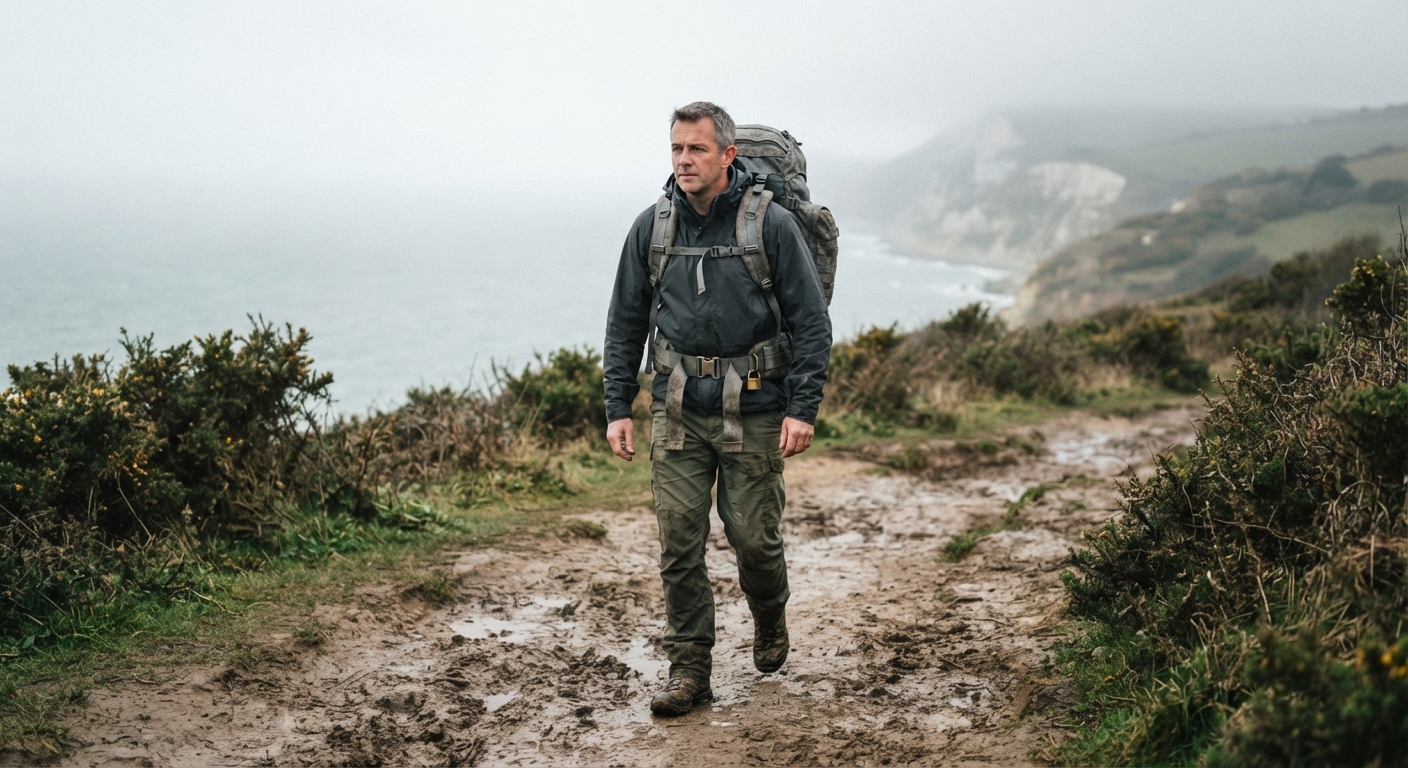
“I think I’ve wrecked my knees” is one of the first things people say after a long walk with a loaded pack, once the joint starts grinding on the descents or aching on the way home. The catastrophic word usually arrives before anyone’s actually worked out what happened.
That word is doing more damage than the knee is. The instinct to assume the worst is usually wrong; the possibility most people don’t consider — that this is ordinary adaptation, the same discomfort any joint produces when a new mechanical demand lands on it — is usually right. Confusing the two leads to one of two mistakes: pushing through a real injury, or quitting a routine that was actually working.
The rest of this comes down to telling those two things apart, and what to do once you have.
The Mechanics of Load: Why Your Knees Feel It
The knee is a complex joint — a hinge held together by ligaments, cushioned by cartilage, surrounded by muscle. Its job is stability, not heavy lifting. When you add weight to your back and walk, that load transmits through the joint with every step. The forces involved are compressive — the bones pressing together — and shear — the surfaces sliding slightly against each other as your leg rocks through each stride.
📺 Watch: Knee Pain When Running? — Global Triathlon Network
Think of it like a car’s suspension. Drive a normal load and the springs cope fine. Add a heavy trailer and the system compresses more. If the car’s not used to it, you’ll hear creaking from the shock absorbers — not because the car is broken, but because the system is adapting to a new demand.
The muscles around your knee — quads, hamstrings, calves — are the springs in this analogy. Rucking stresses them, and they respond by getting stronger. That is precisely how loaded exercise supports joint health: the surrounding musculature becomes more capable of absorbing and distributing force, which reduces stress on the joint itself. The mechanism is straightforward — loaded work, done progressively, makes the support structures around your knee more resilient.
The problem isn’t rucking. The problem is adding load faster than your muscles have adapted to carry it. That’s when pain becomes a signal worth paying attention to.
The “Runner’s Knee” Myth vs. Rucking Reality
There’s a persistent idea that running destroys knees and that rucking is the gentler alternative. Both parts of that are wrong.
Running injuries can affect anyone — experienced athletes and beginners alike. Knee pain associated with running has many causes, from patellar tendinopathy to iliotibial band friction, and the underlying mechanism in most cases is the same as rucking: a structure being loaded beyond its current capacity to adapt. Running and rucking are different activities with different mechanics, but both place significant force through the knee — and both can cause pain when load increases too quickly for the tissues involved.
The myth worth dispelling is that rucking is automatically safer because it’s slower. It isn’t. What it is, is more accessible — most people can walk with load long before they can run with it, which means the progression can be gentler. But if you add 20kg on your first ruck and march straight up a hill, you’re loading your knees as hard as any high-impact activity would, just more slowly.
The honest answer is that neither running nor rucking is inherently bad for knees — both are forms of load-bearing exercise that, done progressively, strengthen the structures around the joint. What matters is how you manage the load relative to your current conditioning.
The fear most new ruckers carry — “I’m doing permanent damage” — is usually unfounded. Pain that fades with rest and lighter loads is far more common than genuine structural injury. But that distinction is important enough to look at directly.
The Difference Between Adaptation and Injury
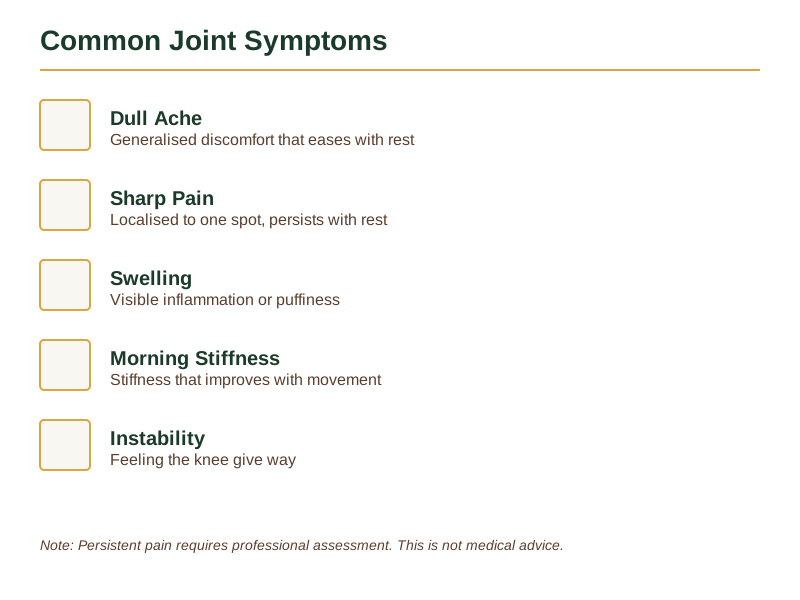
Say it plainly: mild, dull, generalised ache that eases with rest and reduced load is common as your muscles adapt to carrying weight. Pain that is sharp, localised to one spot, one-sided, or that doesn’t ease when you rest and reduce the load is a signal to stop and get it assessed.
It’s not a complicated test, but it requires honesty with yourself about which category you’re actually in.
Do not train through pain — and by pain, we mean sharp, localised, persistent pain. If the ache you’re feeling is diffuse, spread across the joint, and noticeably better the morning after a rest day, you’re in normal adaptation territory. A useful rule of thumb: if the discomfort eases within a day or two of rest, your training load was probably right for where your body is right now.
If the pain is sharp, stays in one specific spot, is in one knee and not the other, or doesn’t move with rest, those are injury signals. The correct response is to stop, rest, and see a GP or physiotherapist for a clinical assessment. Nobody can diagnose a knee injury from an article, including this one. The specific structure involved — ligament, meniscus, cartilage, tendon — requires hands-on assessment, sometimes imaging, and professional interpretation.
NHS guidance draws the same line, from the other direction. A knee that’s very painful, badly swollen, has changed shape, or locks or gives way needs urgent triage — contact NHS 111 rather than waiting for a routine appointment. Pain that isn’t severe but hasn’t improved within a few weeks still needs a GP visit; it’s just not an emergency one. Either way, the tissues involved need professional input before you load them again.
Here’s how that plays out across the symptoms most ruckers actually report:
| Symptom | What it usually means | What to do |
|---|---|---|
| Dull, generalised ache, both knees | Normal adaptation to new load | Keep training, but check whether load increased too quickly |
| Sharp pain, one spot, one knee | Possible tissue-specific injury | Stop and seek assessment before continuing |
| Swelling or a change in shape | Needs urgent triage | Contact NHS 111 or see a GP promptly |
| Morning stiffness that eases with movement | Common, usually benign | Monitor, watch your load progression |
| Ache that fades within a day or two of rest | Normal adaptation | Maintain current load |
| The knee giving way or feeling unstable | Possible structural issue | Seek professional assessment |
That’s the threshold this article exists to draw. Most readers will find their situation sits comfortably in the first category or two — and the fix is to manage load progression, not to stop rucking.
Not sure if your gear is contributing to the pain? Download the Free First Ruck Gear Checklist to check whether your pack setup, load distribution, and footwear are working for you.
UK Terrain and Conditions: How Environment Affects Pain
A muddy coastal path, a steep descent on a Lake District footpath, a wet towpath with uneven stone — British terrain loads your knees differently to a flat treadmill.
Pack bounce is the main culprit on uneven ground. A rucksack that shifts up and down with each step transmits jarring force through the knee on every footfall. On flat ground this is manageable; on rough terrain it compounds. The fix is pack stability — making sure your load sits close to your spine, your hip belt is doing its job, and the weight isn’t pulling you backward on descents. If you’ve never adjusted your pack’s load lifters, now’s the time — pulling them tight pulls the load toward your shoulders and reduces the pendulum effect that bounces weight off your hips.
Poor load distribution — particularly a pack that sits too low or a hip belt that fastens around your waist instead of your hip bones — shifts weight onto your shoulders and spine rather than your hips, which increases the compressive load your knees have to manage with every step. This is a setup issue, not a rucking problem, and it’s one of the most common preventable causes of knee discomfort in new ruckers. Checking that your hip belt sits directly over your iliac crest (the bony ridge at the top of your pelvis) is a two-minute adjustment that can make a significant difference.
Footwear matters on terrain for reasons beyond grip. Worn outsoles change your biomechanics subtly — different friction, different heel strike pattern — which changes the forces traveling up through your knee. If you’re getting knee ache on descents and your shoes are worn, that’s worth checking before you blame the ruck. If it’s time to replace worn-out footwear, a cushioned option like the Hoka Clifton (paid link) absorbs more of that peak impact through the knee than a worn-flat shoe will, though check current model numbers as Hoka has moved the line on since.
See Hoka Clifton on Amazon → (paid link)
Strap discomfort, hot spots, pack instability — these complaints are common, and they’re almost always setup problems rather than fundamental incompatibilities between rucking and healthy knees. Most are fixable with better pack adjustment or footwear, not by stopping.
Frequently Asked Questions
Is rucking bad for your knees if you have arthritis?
Rucking can support muscle strength around the knee, which is beneficial for joint health generally, but if you have arthritis or any diagnosed joint condition, get individualised guidance from a GP or physiotherapist before starting. They can advise on appropriate weight and intensity for your specific situation — what works for someone without joint issues isn’t necessarily right for you.
How much weight should I carry to see benefits without hurting my knees?
Start light. Most people beginning weighted walking start at 5–10% of their body weight — roughly 3.5–7kg for a 70kg adult — and build gradually as their muscles adapt. If in doubt, start lighter than feels challenging; you can add load next session. If sharp or one-sided pain shows up, drop the weight or stop and reassess.
What should I do if my knee swells after a ruck?
Swelling is a clear signal to stop and seek assessment. See a GP or physiotherapist promptly — do not train through swelling, do not assume it’ll settle on its own without understanding what’s causing it.
Where to Go From Here
Pain is information, not a stop sign — but only if you read it correctly.
The threshold is clear: dull, generalised ache that eases with rest and reduced load is normal muscle adaptation. Sharp, localised, one-sided pain that doesn’t respond to rest and lighter loads is a signal to stop and get assessed. Most knee discomfort during rucking falls into the first category, and the fix is better load management — not giving up.
Check your pack setup. Reduce your load if you’ve been progressing too fast. Make sure your footwear is right for the terrain. These are the practical steps that sit between you and most preventable knee pain during rucking.
If pain is persistent, one-sided, or accompanied by swelling, see a GP or physio. That’s not a failure of your training — it’s the correct response to an injury signal. Rucking offers genuine strength and bone health benefits, and it is worth doing properly.
Now you know what the signal means — Get the Free First Ruck Gear Checklist to make sure your kit isn’t the part of the equation you need to fix first.
The Medical Backing
The GP/111 thresholds above come straight from NHS knee pain guidance; the Chartered Society of Physiotherapy and the British Association of Sport and Exercise Medicine provided the wider professional context on load-bearing exercise and joint adaptation. None of that replaces a hands-on assessment of your own knee — this article can tell you which category you’re probably in, not confirm it.
For the pack-fit and blister side of things, our guide to rucking troubleshooting: blisters, chafing and pain — what actually works covers the setup fixes in more depth.