Can Your Walking Shoes Survive the Weight?
As an Amazon Associate we earn from qualifying purchases. Some links on this page are affiliate links, which means we may earn a small commission if you make a purchase.
The instinct is to buy the softest, most cushioned shoe on the shelf — it feels like the safest bet for your joints. Under load, that instinct is usually wrong. A wider base and a firmer ride do more for your knees than a deep, plush midsole ever will, and the gap only shows up once you’ve got 10-15kg on your back or chest.
Load changes the maths of walking. The knee takes a heavier hit with every footfall, balance narrows, and a shoe that felt fine unloaded can become the wrong choice the moment you add weight. Knee discomfort, a wobble on uneven ground, a sense your footwear isn’t keeping up — all three point to the same fix, and it isn’t a fashion upgrade. It’s joint protection.
What follows is what actually matters when you’re choosing footwear for weighted walking, and why plush and cushioned isn’t the same thing as safe.
The Hidden Cost of Weighted Walking
When you walk, your knee absorbs roughly three times your body weight with each step. Add a weighted vest or rucksack and that force multiplies. The shoe between your foot and the ground is doing more work than most buyers realise — it’s not just about comfort, it’s about how effectively the joint is being loaded and whether the foot is stable enough to avoid rolling under that extra force.
Stability matters most here. A shoe that lets the foot collapse or roll inward under load puts extra stress on the knee and ankle — and for older adults, a loss of balance carries higher stakes than for a younger person. Well-fitted, supportive footwear is a basic condition for exercising safely at any age, and that condition gets stricter the moment you add load.
The hidden cost isn’t just today’s discomfort. It’s the compounding effect of repeatedly loading an unstable joint over weeks and months. A shoe that feels fine on a 20-minute walk unloaded can become genuinely problematic once you’re carrying 15kg regularly.
One thing worth knowing: if you already have a specific foot pain condition — sesamoiditis or metatarsalgia, for instance — the standard stability advice doesn’t automatically apply. Those conditions have their own mechanics, and a shoe that works for most ruckers can make them worse. We’ll come back to that.
The Verdict: Stability Beats Cushioning
For weighted walking, the evidence points clearly in one direction: stability wins, cushioning is secondary.
Here’s why. A wider base of support under the foot improves lateral stability — it gives you a broader platform to balance on when you’re carrying load. A lower, more moderate stack height keeps your foot closer to the ground, which aids balance compared with very tall, narrow-based cushioning. High-stack shoes can feel plush and comfortable unloaded, but that tall midsole creates a narrower base of support — and under load, that narrows your margin for error on uneven UK terrain.
The mechanism is straightforward: the further your foot is from the ground, the less stable your base. A shoe with a firm heel counter and a wider toe box keeps you grounded. A soft, squishy sole that compresses under 15kg of ruck weight doesn’t give you the same feedback. Brand name matters less than these fundamentals — plush max-cushion shoes like the Hoka Bondi or Brooks Glycerin are built for shock absorption on an unloaded run, not for stability under a rucksack, and plenty of owners who like them for daily miles still reach for something stiffer once they’re carrying weight.
The flip: if you have sesamoiditis or metatarsalgia — pain under the ball of the foot or around the big toe joint — a high-cushion shoe may actually worsen the problem by altering pressure distribution under the forefoot. In that case, you need specific footwear support, not general stability advice. See a podiatrist before choosing on your own.
Now you know what to look for — Get the Free First Ruck Gear Checklist to cross-check against the specific features that matter.
What to Look for in a Weighted Walking Shoe
The criteria aren’t complicated, but they matter more under load than they do for a standard walk. Here’s what to check:
📺 Watch: Best Stability Shoes for Walking and Standing All Day (Avoid These Mistakes!) — Flawless Physio
Wide toe box. Your toes need room to splay naturally under load — when you’re carrying weight, the foot flattens and lengthens slightly, and a narrow toe box crowds the digits, reducing balance and increasing pressure on the ball of the foot.
Moderate drop. The drop is the height difference between heel and toe. A moderate drop (roughly 8–10mm) keeps your foot closer to the ground than a zero-drop shoe while still allowing a natural gait. High-drop shoes shift weight toward the heel; under load, that can feel unstable on descents.
Firm heel counter. This is the rigid back of the shoe that holds your heel in place. A shoe where the heel slips or collapses under load transfers extra work to your ankle — exactly where you don’t want it when you’re 5km into a weighted walk.
Removable insole. Useful if you need custom orthotics, or if you want to swap in a lower-profile insole to bring your foot closer to the ground for better ground feel and stability.
Waterproofing. Important for UK weather, but worth checking it hasn’t made the shoe too stiff — a membrane that sacrifices flexibility for waterproofing can actually reduce stability on muddy terrain.
Grip. Matters most on uneven UK terrain, especially once it’s wet — a stable base doesn’t help much if the outsole slides on a muddy path.
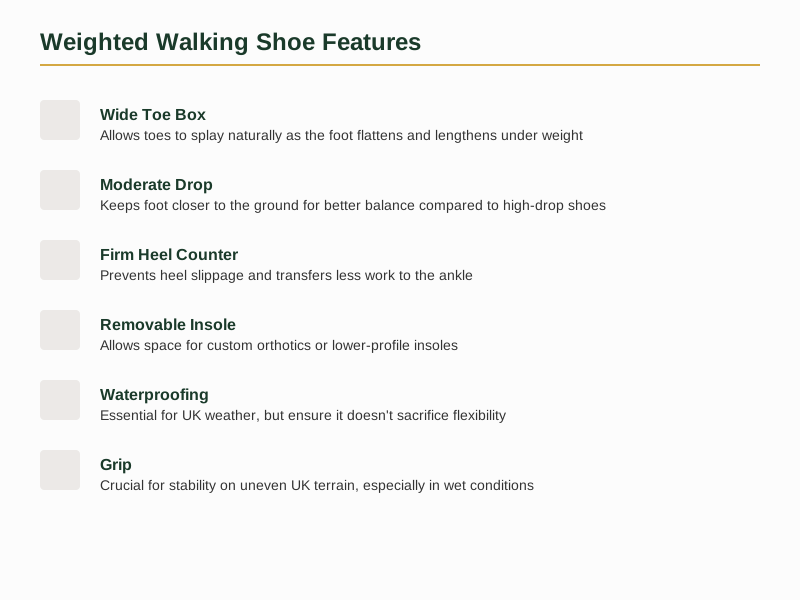
| Feature | Why It Matters Under Load |
|---|---|
| Wide Toe Box | Allows toes to splay naturally as the foot flattens and lengthens under weight |
| Moderate Drop | Keeps foot closer to the ground for better balance compared to high-drop shoes |
| Firm Heel Counter | Prevents heel slippage and transfers less work to the ankle |
| Removable Insole | Allows space for custom orthotics or lower-profile insoles |
| Waterproofing | Needed for UK weather, but shouldn’t come at the cost of flexibility |
| Grip | Matters most on uneven UK terrain, especially in wet conditions |
The honest summary: you’re looking for a shoe that feels planted, not soft. The ones that feel plush out of the box aren’t necessarily the ones that’ll serve you well at 15kg.
Top Picks for UK Ruckers (Based on Stability)
Rather than naming one “best” shoe — which no real comparative test has established — here’s how the main categories shake out for weighted walking:
Trail runners (e.g., Inov-8 Trailfly G 270 (paid link)): The graphene-enhanced outsole gives excellent grip and holds up over hundreds of miles of hard use — genuine durability, not marketing — and the wide toe box is genuinely good for balance under load. The trade-off is a firm ride: this isn’t a cushioned shoe. The 0mm drop also isn’t for everyone — if you’re used to a more traditional heel-to-toe offset, it takes adjustment.
Buy on Amazon → (paid link)
Daily trainers (e.g., Hoka Clifton 10 (paid link)): The plush cushioning is genuinely comfortable, and owners praise the smooth ride for all-day wear. But under load, the softness can feel less planted — and the toe box runs noticeably wider than earlier Cliftons, which some buyers find too generous. Can run warm in summer. Good as a walking shoe for lighter loads; less ideal for sustained heavy rucking.
See Hoka Clifton 10 on Amazon → (paid link)
Walking boots (e.g., Merrell Speed Strike 2 GTX (paid link)): A more athletic, sneaker-like fit than a traditional boot, with a sticky outsole that genuinely grips wet rock and mud, and a waterproof GTX membrane that holds up well through UK weather. The catch is the low-cut design: past roughly 13-14kg of carried weight, the limited ankle support starts to show, and the firmer midsole transmits more feedback from stony ground on longer descents. Best suited to moderate loads rather than the heaviest end of the scale.
Buy Merrell Speed Strike 2 GTX on Amazon → (paid link)
Budget option (e.g., Decathlon Evadict XT6): Functional and affordable, and for the price, the durability holds up. But on almost everything else — fit consistency, stack height, stability under load — it’s a compromise. If you’re starting out and not ready to spend much, it’s worth knowing what you’re trading off.
The honest call: for most people doing regular weighted walking, the Inov-8 Trailfly’s grip and stability under load makes it the category to beat. If budget is tight, the Decathlon option works — just don’t expect it to hold up the same way over 12 months of regular use.
Common Mistakes to Avoid
Choosing style over function. Fashion sneakers — even ones marketed as “walking shoes” — often lack the support and stability needed for load carriage. The comfort they offer unloaded disappears fast once you’re adding weight.
Ignoring fit. A shoe that’s slightly too narrow or slightly too loose unloaded becomes a problem under load. The foot expands and shifts more, and a loose fit means the shoe can’t stabilise it properly. If you can, try shoes on in the afternoon when feet are slightly swollen — that’s closer to how they’ll feel after 10 minutes of weighted walking.
Overlooking the flip condition. Using a stability shoe when you have metatarsalgia or sesamoiditis can make things worse, not better. The localised pressure under the ball of the foot needs specific management — a podiatrist can advise on what’s right for your situation.
Wearing cotton socks. Cotton holds moisture, which softens the skin and increases blister risk under load. Merino wool or synthetic blends wick moisture away from the foot — and for weighted walking, where friction inside the shoe increases with every step, that’s a practical issue, not a minor one.
Frequently Asked Questions
Can I use running shoes for rucking?
Yes, but only if they have a wide toe box and a firm heel counter. Soft, narrow running shoes may feel comfortable unloaded but can cause instability and knee pain under load. Look for the stability criteria above rather than just picking up whatever you run in.
Do I need special socks for weighted walking?
Yes. Merino wool or synthetic blends wick moisture and reduce friction, which matters more under load where your feet shift more inside the shoe. Cotton socks trap moisture and increase blister risk. It’s a small change that makes a noticeable difference on longer walks.
How often should I replace my rucking shoes?
Every 300–500 miles, or sooner if you notice significant wear on the sole or heel counter. Weighted walking accelerates wear because the shoe is doing more work per step. If the heel counter has collapsed or the sole has worn unevenly, the stability you’ve been relying on is compromised.
Protecting the Joint, Not Just the Foot
The core call is straightforward: for weighted walking, pick stability over cushioning. A wider base, a firm heel counter, and a moderate drop will serve your joints better than the softest, plushest option on the shelf. That matters most if you’re in your 40s, 50s, or beyond — where a stumble carries higher stakes and joint health is worth protecting actively rather than reactively.
If you’re just starting out with weighted walking, the shoe decision is one part of a bigger picture: how much weight, how often, and how to progress without overloading the knees in the first few weeks. That’s exactly what our free checklist is built for.
Grab the Free First Ruck Gear Checklist — it covers the shoes, the socks, and the other gear decisions you’ll face before your first weighted walk, so you’re not working those out on the fly.
For the wider picture on how load-bearing exercise affects your skeleton long-term, see our guide on What UK Guidance Says About Weighted Training for Bone Density. NHS and Sport England both publish general guidance on safe, progressive exercise worth reading alongside anything on this page — and if you’re managing an existing foot condition, a podiatrist’s direct advice beats anything written here.
As an Amazon Associate we earn from qualifying purchases. The shoes linked above are ones we recommend based on independent research and owner feedback.