What Shoes Survive a 20kg Ruck in the UK?
As an Amazon Associate we earn from qualifying purchases. This page contains affiliate links — if you buy through them, we earn a small commission at no extra cost to you.
Three things fail on a shoe carrying 20kg, in a fairly predictable order: the midsole collapses first, the upper tears or delaminates at the stress points second, and the outsole loses grip once the tread’s been ground down by the extra weight pressing it into the surface. None of that happens at bodyweight. A shoe can look fine in the mirror and still be failing structurally the moment you strap on a loaded pack.
That’s the real test rucking puts a shoe through—not comfort, not cushioning, but whether the construction survives sustained load without coming apart at the seams (sometimes literally). Most people don’t think about it until a stitching blowout or a flattened midsole forces the question halfway through a walk.
The mistake is reaching for whatever’s already in the trainer rack. Gym runners, daily trainers, even a decent road shoe—none of them are built for the physics of extra weight. UK terrain doesn’t care what the shoe’s marketing copy says, either. A wet Peak District path or a muddy coastal loop finds the weak point fast.
There’s no single named winner here—that data doesn’t exist in any verified independent test. What follows is why shoes fail structurally under 20kg, what to check for in footwear that survives it, and how to match your choice to the terrain you’re actually walking on.
Why Your Gym Trainers Are a Bad Idea for 20kg
Gym trainers and daily running shoes are optimised for one thing: cushioning your bodyweight through a stride. The foam stack is tuned for the impact profile of an unladen runner—lighter, faster, more elastic. When you add 20kg on top, the physics change completely.
The foam compresses faster and doesn’t recover as fully between steps. After a few kilometres, what felt like responsive cushioning starts to feel flat and unstable. The heel-to-toe drop that felt comfortable in a shop feels wrong under load—your foot is working harder to stabilise itself, and that extra work goes straight into your knees and hips.
Traction is the other failure point. Most gym trainers have a relatively shallow, smooth outsole designed for indoor surfaces or hard-packed treadmill belts. UK terrain—wet grass, muddy paths, slate, loose gravel—demands something altogether more aggressive. A shoe that grips perfectly at bodyweight can slip badly once you’re carrying a heavy load and your stride changes to compensate.
The upper construction is the third issue. The stitching and materials in a running shoe aren’t designed to handle the sustained braking and lateral forces that come with carrying weight, especially on descents. It’s not that the shoe will fall apart after one ruck, but the wear pattern accelerates noticeably compared to footwear built for the job.
Something like a Nike Pegasus or a Hoka Clifton makes this failure especially visible on a first ruck: the shoe bottoms out fast, the foot feels unstable on uneven ground, and the grip isn’t there once conditions turn wet.
The honest answer is that a shoe optimised for running without load is working against you the moment you add 20kg. For a rucksack to carry you well, you need footwear that’s part of the system—not something you haven’t thought about yet. If you’re still figuring out what pack works best, our guide to GORUCK GR1 vs Budget Rucksacks covers the other half of that equation.
Midsole Failure: Why the Foam Gives Up First
To understand why some shoes survive 20kg and others don’t, it helps to know what’s actually happening to the foam under your foot.
Compression set is the core problem. Foam is designed to compress under impact and spring back. Under a sustained added load, it doesn’t fully recover between steps. Each footfall slightly flattens the midsole, and over time the shoe loses its original height and responsiveness. A shoe that started with 30mm of stack height might be functionally 22mm after a few heavy rucks—and you won’t notice until the cushioning feels noticeably worse. Softer road shoes tend to feel flat and unstable within a handful of loaded walks; firmer trail footwear holds up for longer, because denser foam simply resists compression set better under sustained added weight.
Heat build-up compounds it. Softer, more cushioned foams generate more thermal energy under sustained compression. Combined with the extra friction from a heavier footfall, this raises the temperature inside the shoe. More heat means more moisture, more moisture means softer skin, and softer skin means blisters. It’s a chain reaction that starts with the wrong midsole.
You cannot judge a shoe’s suitability for rucking from its running-focused spec sheet. A shoe marketed as maximally cushioned and plush is doing the opposite of what you need under load. Look for “firm”, “stable”, and “responsive” in the midsole description rather than “soft” or “plush”.
Upper and Stitching Failure: Where the Construction Gives Way
The midsole isn’t the only thing under stress. Shear forces attack the upper. When you carry weight, your foot shifts slightly inside the shoe with every step, especially on descents where your weight is pushing forward into the toe box. This creates lateral stress on the upper material and the stitching that bonds it to the sole. Running shoes aren’t reinforced for this kind of repeated stress, which is why seam failures and upper tears tend to appear first in the toe and heel counter areas on heavily-used rucking footwear.
Check the stitching and panel construction, not just the marketing photos. A reinforced toe box and heel counter, and stitching that’s actually load-bearing rather than decorative, matter more under 20kg than anything printed on the box.
Now you know what to look for—Get the Free First Ruck Gear Checklist to make sure the rest of your setup matches the standard your footwear deserves.
What to Look for in a Rucking Shoe
Rather than naming a specific model as the winner, here’s the decision framework that actually works: the features that survive 20kg loads are consistent enough that you can apply this checklist to any shoe on the shelf or on a website.
Midsole density is the make-or-break feature. You want firm, not soft. A shoe that feels a bit harsh under your hand or underfoot when you press the midsole is doing the right thing. A shoe that compresses easily under thumb pressure is going to flatten fast under load. EVA foam is fine; the key is density. Some manufacturers use the same foam technology across a range and just tune the firmness differently—look for the firmer end of a brand’s range.
Outsole tread matters more for rucking than for running. Deep lugs—typically 4mm or more—provide genuine grip on soft ground, mud, and wet grass. A multi-directional lug pattern handles the varied stride of a loaded walker better than a directional running pattern. If the outsole looks like it belongs on a road shoe, it doesn’t belong in a ruck.
Upper durability and fit. The upper needs to hold the foot securely without stretching under load. Mesh is fine for breathability but look for reinforced panels around the toe box and heel counter. A secure midfoot lock—whether from a traditional lace cage or a more modern engineered mesh—prevents the foot sliding forward on descents, which is where most of the shear stress concentrates.
Ankle support is context-dependent. A higher collar helps prevent ankle rolls on loose or uneven terrain, but it adds weight and can feel restrictive on easier ground. If you’re rucking mostly on canal towpaths and firm trails, a low-cut trail shoe can work well. If you’re heading onto the Pennine Way or Welsh coastal paths, a mid-cut boot gives more stability under load.
The common mistake buyers make is choosing a shoe for its cushioning stack height—the thicker the midsole, the better the protection, surely? For rucking, the opposite is closer to the truth. A firmer, lower-profile shoe keeps your foot closer to the ground and gives you more proprioceptive feedback about where your foot is landing, which actually reduces fatigue over long distances.
UK Terrain vs. Shoe Choice
UK terrain is genuinely varied, and the right shoe changes depending on where you’re rucking.
📺 Watch: The Best Trail Running Shoes FOR GRIP – Will's World — Outdoors Magic
Boggy ground and soft trails—the kind you find on moorland paths after rain, or in the Lake District after a wet week—demands deep, widely-spaced lugs that can clear mud rather than packing with it. The Salomon Speedcross pattern is the extreme end of this, deliberately aggressive. More moderate trail shoes with a good multi-directional lug pattern handle most UK boggy ground adequately. The grip failure mode here is catastrophic on a descent, so it’s worth not skimping.
Hills and steep paths—the kind of sustained gradient you get on a Welsh mountain or a Peak District ridge—need a stable, firm sole. A shoe that flexes easily under the metatarsals creates a feeling of instability on steep inclines and makes descents harder work. The midsole needs to resist torsional twist, not just vertical compression.
Rocky and root-covered paths—common on UK trail runs and bridleways—require a durable upper with good toe protection and a sole that can grip on wet rock. The Inov-8 Trailfly G 270 (paid link) is a strong match for this kind of terrain: the Graphene-enhanced rubber outsole holds up well and the wide toe box accommodates foot swell under load. The zero-drop design isn’t for everyone—it requires some adaptation if you’re used to a raised heel—but for rucking on technical ground, the ground feel is an advantage.
Buy on Amazon → (paid link)
Winter conditions—cold, wet, dark—shift the priorities. Waterproofing becomes more important when you’re out for two or three hours in sub-zero temperatures. A shoe that lets water in will leave you with cold, damp feet that blister faster. GORE-TEX linings add cost and reduce breathability, but for regular winter ruckers on UK terrain, they’re worth the trade-off.
The pattern across all UK terrain is consistent: firm, stable shoes or boots handle 20kg rucks better than soft road shoes. Less midsole collapse, fewer ankle wobbles, better grip on mixed surfaces. That’s the feature cluster to look for regardless of which specific model you choose.
Budget vs. Premium: Is the Extra Cost Worth It?
The sticker price on a pair of trail shoes can range from around £50 to £180 or more. Does the premium end justify the extra spend for rucking?
For light loads—say, 10kg or under—and flat terrain, a budget trail shoe can work perfectly well. The Decathlon Evadict range is the honest budget pick: strong durability for the price, functional grip, and a reasonable midsole that doesn’t collapse immediately under load. The trade-off is refinement—the upper fit can be inconsistent, the cushioning is basic, and the finish won’t match a premium shoe. For occasional use on easy ground, it’s sorted.
For 20kg loads on mixed UK terrain, the premium end of the market earns its keep. A firmer midsole compound that resists compression set, a more durable outsole rubber that maintains grip over hundreds of kilometres, and a more consistent upper construction that doesn’t stretch or fail under load—these aren’t luxuries when you’re putting serious stress through the shoe week after week.
The trade-off geometry here is simple: budget shoes can work for light, occasional use; premium shoes are worth the investment for regular heavy rucking. Spending more on a durable shoe can save money over time by avoiding replacements and reducing the injury risk that comes from foot fatigue and instability.
If you’re rucking regularly with 20kg, think of it as total-cost-of-ownership: a £90 pair that lasts six months costs more per month than a £160 pair that lasts two years.
Frequently Asked Questions
Can I use hiking boots for rucking?
Yes—and for many UK ruckers, a mid-cut hiking boot is actually the better choice, particularly on rougher terrain. The higher ankle collar provides genuine stability under load, the more robust construction handles the sustained braking forces better, and the firmer sole resists the midsole compression that plagues softer trail shoes. The trade-off is weight and break-in time. A boot like the Merrell Moab 3 is comfortable straight out of the box for casual use, but for heavy repeated loads, it can feel underdamped—the traction on wet ground and the overall durability under load are the weaker points. For regular 20kg rucking on technical ground, a purpose-built boot with a firmer midsole and more aggressive outsole is worth the extra spend.
Do I need special socks for rucking?
Yes, and this is one of the most cost-effective upgrades you can make. Cotton socks hold moisture, moisture softens skin, and soft skin blisters under load. A good merino wool or synthetic blend sock with cushioning in the heel and forefoot manages moisture better and reduces friction. They’re a few pounds more per pair, but they last several times as many washes than budget alternatives. If you’re getting blisters despite otherwise good footwear, the sock is often the culprit.
How often should I replace my rucking shoes?
There’s no fixed mileage that applies universally—it depends on how much you weigh, what load you’re carrying, and what surfaces you’re on. The practical sign to watch for is midsole feel: if the shoe starts to feel noticeably flatter or less responsive than when you bought it, the foam has compressed and it’s time to replace. For regular ruckers carrying 20kg, six to twelve months is a reasonable guide. If you notice uneven wear on the outsole, a collapsing heel counter, or the upper starting to separate from the sole, don’t wait—replace before it becomes a stability problem.
UK Terrain Shoe Requirements
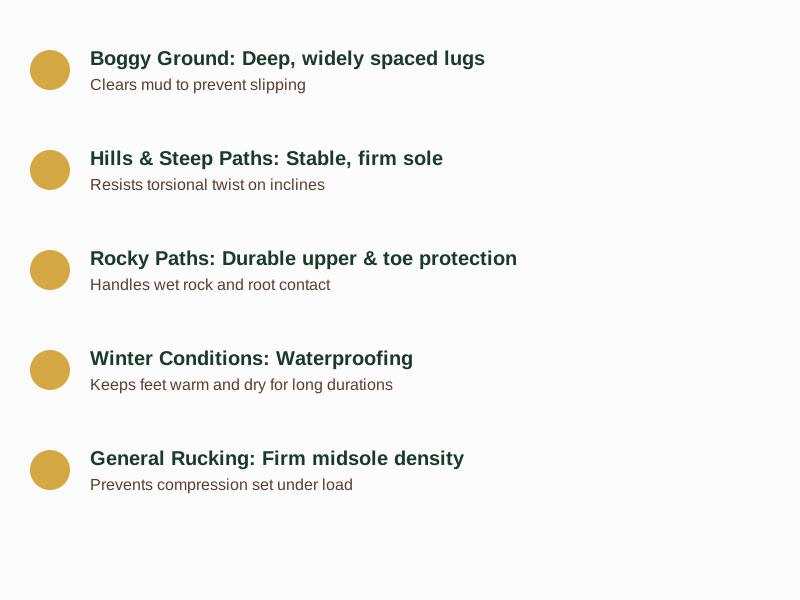
| Terrain Type | Key Feature | Why It Matters |
|---|---|---|
| Boggy Ground | Deep, widely spaced lugs | Clears mud to prevent slipping |
| Hills & Steep Paths | Stable, firm sole | Resists torsional twist on inclines |
| Rocky Paths | Durable upper & toe protection | Handles wet rock and root contact |
| Winter Conditions | Waterproofing | Keeps feet warm and dry for long durations |
| General Rucking | Firm midsole density | Prevents compression set under load |
What Fails First
Soft shoes fail under load in a predictable order—midsole first, upper and stitching second, outsole grip last—and UK terrain punishes whichever one gives out. The fix isn’t finding the one perfect model; it’s knowing which of those three points to check before you buy. Firm midsole. Reinforced upper. Aggressive tread. Ankle support matched to your terrain.
Those four checks will serve you better than any brand name or marketing claim, and the most cushioned shoe on the shelf is usually the wrong choice for rucking, not the safest one. For the general mechanics of load-carriage and UK terrain, British Mountaineering Council, Ramblers Association and Sport England are useful starting points if you want to go beyond this guide.
If you’re building out your first rucking kit, the footwear is one piece of a system. Grab our Free First Ruck Gear Checklist to make sure the rest of your setup—pack, plate, layers—is as well-suited to the load as your shoes are. For the other pieces of that system: GORUCK GR1 vs Budget Rucksacks covers the pack itself; Can Your Running Shoes Survive 50 Miles with a Pack? and Do You Need Ankle-Support Boots for Rucking, or Will Trail Shoes Do? go deeper on shoes versus boots; Rucking on Concrete: Which Shoes Won’t Destroy Your Knees and Trail Shoes vs Road Shoes for UK Rucking: What’s the Difference? matter if your routes lean urban; and Why Rucking Gives You Blisters (and Which Socks Actually Fix It), Merino Socks for Rucking: Worth the Extra Cost? and How to Break in Boots for Rucking (Without the First-March Blister Fest) cover what happens once the shoes themselves are sorted.
As an Amazon Associate we earn from qualifying purchases. The shoes linked above are ones we recommend based on independent research and owner feedback.