GORUCK GR1 vs Budget Rucksacks: What Actually Matters for Rucking in the UK
As an Amazon Associate we earn from qualifying purchases. This page contains affiliate links — if you buy through them, we earn a small commission at no extra cost to you.
Ask around and you’ll get two answers for what pack to buy for rucking: spend £300-plus on a GORUCK because that’s what the serious crowd carries, or grab whatever’s cheapest on Amazon because a bag is a bag. Both answers dodge the actual question. The GORUCK route assumes your budget and your commitment level before it knows either one. The cheap-Amazon route ignores that a hip belt with no real structure will end your rucking before your fitness does — shoulders burning, hips aching, telling yourself it’s just part of the training. It isn’t. It’s a gear problem, and it’s a solvable one.
This is the honest version: which packs actually hold up to rucking in the UK, what separates the ones that survive a wet British winter from the ones that don’t, and which one fits your situation right now — not which one has the loudest fanbase.
Why Your Rucksack Choice Matters (Beyond the Price Tag)
Load-carry comfort is not primarily about capacity. A 40-litre pack that distributes weight badly will hurt you more than a 25-litre pack that fits properly. What actually matters is strap width, padding density, and whether the hip belt is load-bearing or decorative.
📺 Watch: How to Fit Your Rucksack Correctly — Trekitt
A hip belt that’s too narrow concentrates 15kg onto a strip of skin no wider than a hand, which is exactly where chafing starts. An articulated belt—one that moves independently of the shoulder straps—lets the pack sit correctly on your hip bones rather than sliding up or around. Without that, you’re carrying the weight on your shoulders for the full duration. The straps and belt do the work; the back panel mostly keeps things stable.
UK terrain tests durability in ways that don’t show up in product listings. Trail mud, canal towpaths, morning drizzle on a coastal path—a pack with cheap stitching or a DWR coating that washes out after one season will show it fast. The seam where the shoulder strap meets the back panel is usually the first failure point on a poorly made pack, because that’s where load stress concentrates with every step.
What separates a pack built for rucking from a standard hiking bag isn’t always obvious from the product listing. Reviewers on UK forums who’ve put miles on patrol-style packs note that the difference often comes down to whether the hip belt is an afterthought or genuinely load-bearing—a budget pack with thick straps and a properly articulated belt can out-perform a pricier one that skimped on that detail.
Something else that catches people out: adding weight changes your gait. A pack that fits perfectly unloaded can create a hot spot once there’s real load inside, because your foot flattens and lengthens slightly under weight. Your footwear matters as much as the pack—but we’ll come to that.
For now, if you’re starting out: focus on strap quality and hip belt design first. Everything else is secondary.
The Premium Choice: GORUCK GR1
If you’ve done any research into rucking gear, you’ve hit the GORUCK name. The GR1 is the pack that most serious ruckers reference, and it has the reputation for a reason.
Owners widely describe it as bomb-proof — independent long-term reviews report years of heavy daily use with no meaningful structural wear, which is unusual at any price point. The construction uses a rigid frame sheet and hardened hardware that most alternatives simply don’t match at the price point. For someone committed to regular rucking and wanting a single pack that works for travel, daily carry, and training, the GR1 genuinely earns its position.
The complaints are real, too. The shoulder straps are stiff, with a noticeable break-in period that some find uncomfortable until the material softens. Storage is deliberately basic: there’s no built-in waist belt or water-bottle pockets, which reflects GORUCK’s philosophy of keeping the pack simple and tough rather than feature-heavy. The front and laptop pockets can also become hard to access once the main compartment is full.
There’s also the price. GORUCK’s own site prices the GR1 from around $335 up to $395 depending on finish, which lands well north of £280 once it’s landed in the UK — before any import markup UK buyers often eat on top of that. You’re paying for the build quality and the brand’s “carry this forever” positioning. Whether that’s worth it depends on how much you’ll use it: for daily rucking or frequent travel, the cost amortises down to almost nothing per session. For occasional weekend use, it’s a much harder number to justify.
Best for: buyers who want a buy-it-for-life pack and are willing to pay for toughness and versatility over features. If you want one pack that does travel, gym, and rucking without compromise, this is where most people land.
The Honest Budget Alternative: Snugpak Response Pack
Not everyone wants to spend £280-plus on their first rucking pack, and honestly, that’s fair. The Snugpak Response Pack earns a look if you’re after a capable option without the premium price.
UK forum discussions describe it as a sturdy, practical hip pack that works well for grab-and-go carry and has enough structure for bushcraft or patrol-style use. The build quality holds up under load, and the hip-pack flexibility means it works as either a standalone smaller carry or paired with other kit. For technical or outdoor work, it handles the basics without drama.
The trade-off is that it’s utilitarian rather than sleek. It reads as functional gear rather than an urban bag, and the bulk on the belt is real if you’re used to a slimmer pack. If you want something that looks discreet for the office commute, this isn’t it. But for rucking practicality and honest value, it’s worth considering.
There’s also the Condor Venture, which comes up regularly in UK rucking discussions and typically runs somewhere in the £90-£100 bracket at UK retailers — still a fraction of what a GR1 costs. What stands out under load is the thick straps, articulated belt, and features like a laptop pocket for plates and a chest strap—the kind of detail that stops weight shifting during a longer ruck. At that price point, it’s a sensible entry option if you’re starting out and don’t want to commit three figures before you know whether rucking is for you.
Best for: budget-conscious ruckers who want genuine load-carry comfort without the premium price. The Snugpak Response Pack is the more complete option if you need hip-pack flexibility; the Condor Venture suits you if you’d rather bank the difference and still get the structural basics right.
Other UK Rucking Essentials (Vests, Plates, Shoes)
A pack is only part of the setup. The ruck plate inside it determines how stable the weight sits, and the shoes on your feet determine whether the load causes blisters or joint pain on longer sessions.
If you’re adding meaningful weight, the plate itself matters. GORUCK’s curved ruck plate (sold direct and through retailers like Rogue Fitness) is the premium reference point—the curvature follows your spine and keeps it sitting close and stable against the back, which reduces movement during runs or faster walking. Construction quality matches the price. Shipping damage and fit issues are the real trade-off: some buyers report plates arriving with cosmetic dings, and if the sizing is off for your pack’s plate pocket, it can jostle during movement.
The Mirafit Ruck Plate is the cheaper route—Mirafit’s own site lists cast-iron ruck plates from around £20 depending on weight, a fraction of the curved GORUCK plate’s cost—and it does the core job for weighted walking and basic rucking. The catch is that flat plates without contouring can shift more during running or aggressive movement, and cosmetic imperfections on arrival show up in buyer reviews. It’s solid value at that price; just know what you’re trading down from.
Net result: the curved plate’s contour keeps weight stable under movement, which matters if you’re doing anything faster than a steady walk. Flat budget plates work fine for casual rucking; they’re just less composed during dynamic movement.
Footwear is the part most beginners overlook until they’ve got blisters. Adding load changes your gait, which shifts pressure across your foot, and a shoe that fits perfectly unloaded can start rubbing once there’s real weight behind every step.
For UK terrain specifically, the Salomon Speedcross Peak (paid link) earns its reputation for mud grip—trail runners and hikers consistently praise its traction on wet fields and soft ground, which covers most of what a British coastal path throws at you in winter. It’s not without downsides: it runs warm, doesn’t drain well, and can feel heavy on firm ground. The Inov-8 Trailfly G 270 (paid link) is the other one to consider: excellent grip and durability are the consistent praise points, plus a Graphene-enhanced outsole that genuinely holds up over high mileage. It’s firmer and less cushioned than something like a Hoka Speedgoat, which matters if you’re on hard-packed trail or urban pavement rather than soft terrain.
See Salomon Speedcross Peak on Amazon → (paid link)
See current price on Amazon → (paid link)
For something more affordable, Decathlon’s Evadict range gets the basics right at a fraction of the price—decent grip, functional cushioning, no-frills durability. It’s solid for mixed training but doesn’t have the composure or longevity of the premium options.
One consideration that matters more than people expect: the best shoe for rucking depends partly on where you’ll be carrying the load. A UK concrete seafront in winter is harder on your joints than a trail—the added cushioning of something like the Hoka Clifton 10 (paid link) or Speedgoat 5 matters more on pavements than on soft ground (Hoka iterates this line yearly, so check what’s actually in stock rather than assuming a specific model number stays current). Factor in your most common terrain before you buy.
Check Hoka Clifton 10 price → (paid link)
Rucksack Comparison Reference
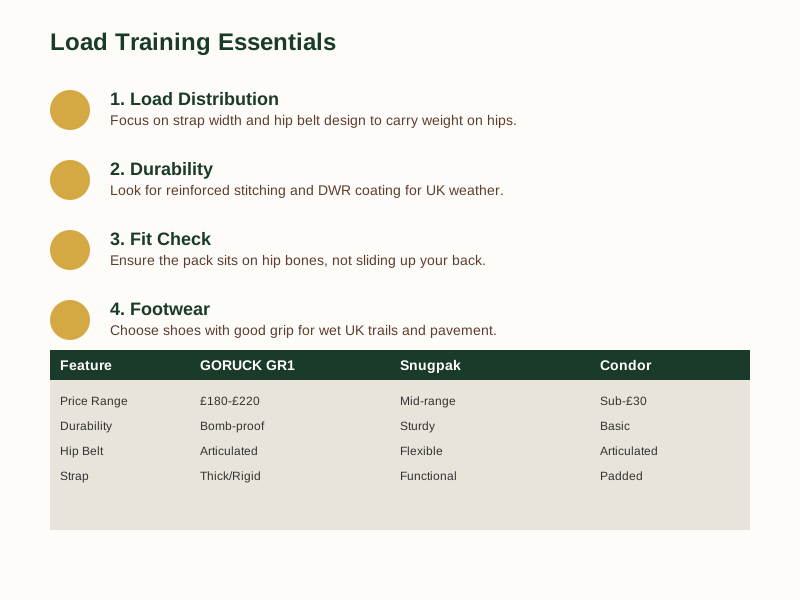
| Feature | GORUCK GR1 | Snugpak Response Pack | Condor Venture |
|---|---|---|---|
| Price Range | £280+ | Mid-range | ~£90-£100 |
| Durability | Bomb-proof | Sturdy | Basic but functional |
| Hip Belt | Articulated | Flexible | Articulated |
| Best For | Travel & Daily Carry | Grab-and-go & Bushcraft | Entry-level rucking |
| Strap Quality | Thick & Rigid | Functional | Thick & Padded |
Frequently Asked Questions
What weight should I start with for rucking?
The general starting point is around 10% of your body weight. For an 80kg person, that’s roughly 8kg in the pack. Start lighter than you think—the common mistake is loading up too fast because a heavier load looks more impressive than a sensible one. That’s how most UK beginners end up with a knee problem in week two.
Do I need a special rucksack for rucking?
You don’t strictly need a “rucking” pack, but you do need one with thick straps and a lumbar support belt to prevent shoulder and hip pain on longer sessions. A standard backpack often lacks load-bearing hip belts and tends to concentrate weight on the shoulders rather than the hips.
Can I use a normal backpack for rucking?
Yes, but be aware that standard backpacks often lack the load-carry comfort and durability needed for regular sessions with added weight. Better alternatives specifically designed for weighted carry include packs with wider, padded shoulder straps and genuine load-bearing hip belts—and the good news is you don’t need GORUCK money to get that right.
Explore More Topics
Go deeper on specific topics:
- How to Make a DIY Ruck Plate (Without Breaking Your Back)
- Ruck Plates vs Sandbags vs Water Bottles: Which Weight Works Best?
- Adjustable Weighted Vests for UK Rucking: Which Mechanism Actually Lasts?
- How to Pack a Rucksack for Rucking (So It Doesn’t Bounce)
Before You Buy
The short version: the GORUCK GR1 is the buy-it-for-life pick for anyone rucking regularly, or wanting one pack that also covers travel and daily carry—budget £280 or more for that privilege. The Snugpak Response Pack wins on value and hip-pack flexibility if you don’t need a full-size rucksack. The Condor Venture, at roughly £90-£100, sits in the middle: proper straps and an articulated belt without GORUCK-level spend. For most readers planning to ruck regularly, the GR1 is the right long-term call; if you’re not yet sure rucking is for you, start with the Condor Venture and upgrade once you know.
Strap quality and hip belt design are what separate a pack that lasts from one that has your shoulders aching by week two—not the price tag, and not the logo.
If you’re still deciding, get the Free First Ruck Gear Checklist—it walks through what to prioritise: pack, plate, footwear, and the small items that actually matter on a first real session.
This guide draws on gear reporting from UK rucking and bushcraft forums and outdoor retailers, cross-checked against the British Mountaineering Council, the Outdoor Industries Association and Sport England for the wider UK outdoor-activity context.
As an Amazon Associate we earn from qualifying purchases. The products linked above are ones we recommend based on independent research and owner feedback.