Do You Need Ankle-Support Boots for Rucking, or Will Trail Shoes Do?
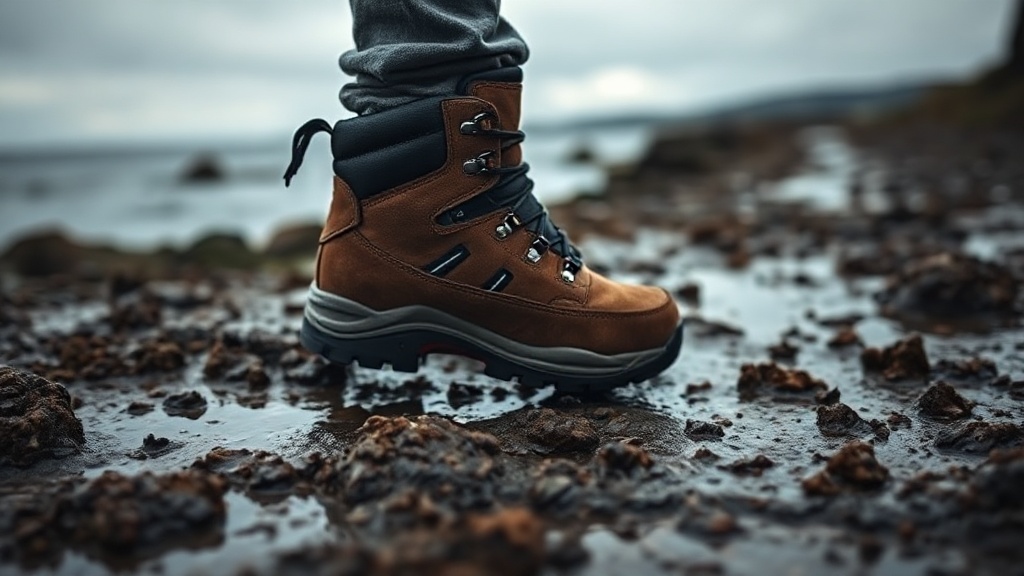
“Ankle support” gets printed on boot boxes like it’s one measurable thing. It isn’t. It’s shorthand for at least three separate mechanisms—restricted inversion range, a stiffer heel counter, and a raised collar that changes how load transfers up the leg—and only one of those is really in play once you’re carrying weight over rough UK ground. Conflate them and you’ll end up buying a boot for a problem your terrain doesn’t actually have.
This article separates the mechanism from the marketing: what ankle support does under a loaded pack, which terrain and injury histories genuinely justify it, and three specific picks—one for technical ground, one for everyday mixed use, one for a tighter budget. The short version: fewer ruckers need a boot than the box implies.
Why Ankle Support Matters Under Load
Start with what’s actually happening mechanically. Carrying weight shifts your centre of gravity forward, which increases the torque at your ankle joint through each step. On flat, predictable ground that extra load is manageable. On uneven terrain, that torque is what your ankle has to resist when your foot lands on a side slope or a wet rock—and where it fails, it fails fast.
📺 Watch: Foot & Ankle Mechanics During Gait Cycle & Functional Movements — Live Well Health Centre
A mid- or high-cut boot does physically restrict how far your ankle can invert before something gives—that part is simple geometry, not marketing. Whether that translates into fewer actual sprains is a more contested question than the boot aisle suggests, and it’s worth unpacking properly rather than taking on faith; more on that below. What the extra coverage reliably buys you is a mechanical ceiling on extreme ankle angles, which matters most in exactly the moment a wet rock or a side-slope catches you off guard on rocky coastal paths and steep muddy trails.
Pack fit also plays into this. When a pack sits close to your back and the load is stabilised by your hip belt rather than pulling you backwards, you have less foot instability through the stride. When the load is poorly distributed, your foot strikes become more variable—and variable foot strike is where rolling happens. Ankle coverage isn’t the only variable, but it is a meaningful one on technical ground.
The Best Boot for Technical Terrain: Scarpa Rush TRK GTX
If you’re doing the kind of UK rucking where the ground fights back—steep muddy coastal paths, wet rocks, hard-packed descents with a loaded pack—the Scarpa Rush TRK GTX is the boot that earns its weight.
The feature doing the real work here is the 3D Autofit ankle pad. Rather than a stiff collar that holds your ankle in one position, it cradles and pads the ankle bone through movement. Combined with the reinforced heel, this gives genuine lateral stability on uneven ground without the dead, cardboard-like feel of a cheaper boot. In BASE Magazine’s UK review, the ankle hold stood out as noticeably better than standard hiking boots on muddy coastal paths and steep terrain—the boot didn’t twist when stepping onto a wet rock at an angle.
The PRESA outsole is the other reason this boot is worth considering over a standard hiking boot. The lug pattern is specifically designed for grip on soft and wet ground—the kind of surface the UK throws at you nine months of the year. If you’ve ever stepped onto a wet rock in a boot that felt fine on dry ground and watched your foot slide sideways, you understand why the outsole pattern matters more than the price tag.
On waterproofing: the GTX designation means a Gore-Tex membrane is built into the boot. For UK rucking this is essentially non-negotiable on technical terrain—you’re crossing streams, standing in bog, walking through wet grass for hours. Feet that stay wet are feet that soften, and softened skin blisters faster under load.
Is it light? No—and it shouldn’t be. A boot built for ankle stability and durability under load weighs what it weighs. The Scarpa Rush TRK GTX weighs around 570g per boot—noticeably more than a trail shoe, but on technical terrain that weight buys you something real: a sturdier platform underfoot and less flex exactly where the ground stops being predictable.
The Best All-Rounder for Mixed Terrain: LOWA Renegade Evo GTX Mid
If your rucking splits between canal towpaths, mixed trail, occasional roads, and the odd coastal path—which covers most UK ruckers—the LOWA Renegade Evo GTX Mid is the boot that earns its place in the cupboard.
The mid-cut design is the key distinction here. It’s high enough to offer genuine ankle support and low enough not to restrict your stride on longer, flatter ground. The mechanism is straightforward: a mid-cut boot stabilises the ankle without the full flexion restriction of a high-cut, which matters when you’re covering distance. You feel less of the knee and lower back fatigue that comes from boots that force a more rigid stride.
The Vibram sole is the Renegade Evo’s workhorse feature. Vibram is the brand that trail runners and hiking boots point to when they want to signal genuine grip—and the cushioning compounds that grip with shock absorption on harder surfaces. On a UK seafront in winter, where you’re walking on wet concrete and cobblestones between sections of muddy path, that cushioning matters. The sole doesn’t just grip; it absorbs enough to keep your joints from taking every shock.
Gore-Tex waterproofing handles the other half of the UK problem. The Renegade Evo’s Gore-Tex membrane keeps water out while managing foot moisture—important on long rucks where your feet sweat as well as encounter puddles. The Nubuck leather upper is supple enough to break in without the weeks-long stiffness of full-grain leather, and it moulds to your foot over time. It’s a boot that holds up equally well for a daily commute and a weekend trail session—one pair covering both instead of needing a dedicated pair for each.
The Support vs. Comfort Trade-off
Here is the verdict the rest of this article builds to, and it won’t be the one the boot manufacturers want you to hear: boots make sense mainly for readers with a history of ankle instability or sprains. For most people, a lower trail shoe allows more natural foot movement and is lighter over distance.
The mechanism is mechanical and it is not complicated. Boots restrict ankle flexion, which shifts more work to the knee and lower back through the stride. The added boot weight also increases energy cost per step compared with a trail shoe. This isn’t a marginal difference on a 15km ruck with 15kg—it compounds across thousands of steps.
The honest trade-off is this: ankle coverage puts a mechanical ceiling on how far your ankle can invert before something gives—that part is geometry, not marketing. Whether it actually cuts sprain rates is less settled than the boot aisle implies. Most of the research on high-top versus low-top footwear comes from jump-and-cut sports, and it’s mixed at best—a 2019 systematic review and a 622-subject trial both found no significant difference in sprain rates between the two, and one strand of research suggests high-tops can slow the reflex that catches an early roll, which cuts against the “get a boot if you’ve had ankle problems” instinct rather than for it. None of that research is about walking a loaded pack over a side-slope, which loads the ankle very differently from cutting on a court, so it doesn’t settle the rucking-specific question either way—but it’s reason enough not to treat the extra coverage as a proven fix rather than a reasonable precaution. Either way it costs you restricted natural ankle movement, added weight, and reduced breathability. A trail shoe on flat or moderate ground will keep your feet fresher, your gait more natural, and your energy cost lower per kilometre. A boot on technical terrain is the more cautious pick if you’ve rolled that ankle before—recovery from even a moderate sprain commonly runs six to eight weeks—but treat it as a risk hedge, not a guarantee.
The decision isn’t “boots vs. shoes”—it is “does my terrain and my ankle history justify the trade-offs that come with a boot?” For most readers rucking on UK public paths and parks, trail shoes do the job. For those on coastal paths, steep ground, or with a history of ankle problems, a mid- or high-cut boot is the more cautious call.
What about blister risk? The comparison that boot makers imply—boots prevent blisters because they prevent the instability that causes rubbing—is incomplete. Boots also trap more heat and moisture than trail shoes, which is a blister driver in warm conditions. On a cold, wet UK coastal ruck that isn’t a concern. On a summer ruck with a heavy pack, it might be.
How to Choose: The Decision Matrix
The two variables that decide which boot you need are terrain type and ankle history. Everything else is secondary.
📺 Watch: TOP TIPS to check your walking boots fit! — Taunton Leisure
For technical, muddy, or steep terrain—coastal paths, hill routes, anything with significant elevation change under load—choose the boot with the most genuine ankle support: the Scarpa Rush TRK GTX. The ankle padding and reinforced heel are not marketing extras; they do the job on terrain where a roll has real consequences.
For mixed terrain, everyday use, or frequent rucking—canal towpaths, park loops, moderate trails, regular weekly miles—choose the boot that balances support with versatility: the LOWA Renegade Evo GTX Mid. The mid-cut design, Vibram sole, and Gore-Tex waterproofing handle most UK conditions without the weight penalty of a high-cut boot.
For dry terrain, lighter use, or tighter budget—occasional walks, dry weather only, no technical ground—the Capriolo Alto Lightweight Hiking Boot is worth knowing about. The Vibram outsole handles wet and muddy conditions adequately. The leather upper resists water well enough to wash mud straight off it. And at around 1.07 kg per pair it is noticeably lighter than the other two options. The limitation is the flat grain leather: flexible and mud-resistant, but less stiff than technical footwear. More importantly, it skips Gore-Tex for a Sympatex lining instead—waterproof on paper, but with nowhere near Gore-Tex’s UK rucking track record, on the lowest-cut and lightest-built boot of the three. That’s a fine trade on a dry ruck; on a genuinely wet one, it’s the setup you’re least sure will hold up. For someone in a dry part of the UK, or someone who only goes out when the weather is fine, it’s still a functional option at a lower price point.
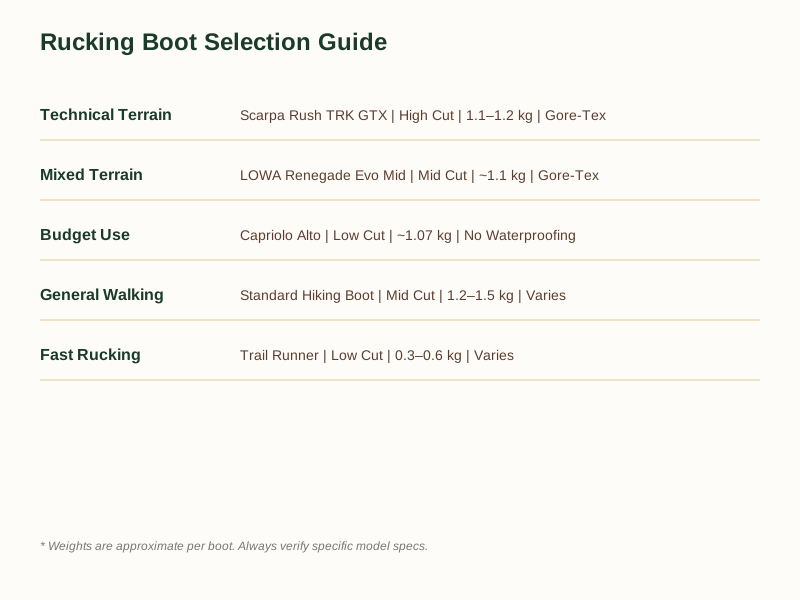
Here’s how the three stack up side by side, with two general categories for reference:
| Boot | Cut | Weight (per boot) | Waterproofing | Best For |
|---|---|---|---|---|
| Scarpa Rush TRK GTX | High | ~570g | Gore-Tex | Technical terrain |
| LOWA Renegade Evo Mid | Mid | ~590g | Gore-Tex | Mixed terrain |
| Capriolo Alto Lightweight | Low | ~535g | Sympatex | Dry, budget use |
| Standard Hiking Boot | Mid | 600g–750g | Varies | General walking |
| Trail Runner | Low | 250g–350g | Varies | Flat, fast rucking |
If you want to benchmark a widely-available Gore-Tex mid-cut boot without the technical specs of the three above, the Merrell Moab 3 GTX (paid link) is a solid reference point — it’s comfortable out of the box with a grippier Vibram outsole than its predecessor, though it lags slightly behind more technical picks on wet rock grip. It’s worth checking current UK stock and reviews given typical availability fluctuations.
See Merrell Moab 3 GTX on Amazon → (paid link)
The takeaway: don’t choose a boot because it looks serious. Choose one because your terrain, your load, and your ankle history make the support trade-off worth it.
Frequently Asked Questions
Can I wear trail runners for rucking?
Yes, for most flat to moderate terrain. Trail runners are lighter and more breathable than boots, which reduces fatigue over distance. The trade-off is less ankle coverage. If you have a history of ankle instability, or if you’re planning to ruck on uneven or technical ground, that reduced coverage becomes a real risk factor. For park loops, canal towpaths, and moderate trails, trail runners are a perfectly sound choice.
Do I need high-top boots for rucking?
Not necessarily. Mid-cut boots like the LOWA Renegade Evo offer a practical middle ground—enough ankle support for most UK terrain without the full restriction of a high-cut. High-tops (the Scarpa Rush TRK GTX, for example) make more sense on genuinely technical ground; if you’ve had ankle problems before, treat that as a reason to be more cautious about terrain choice, not a guarantee that extra coverage will fix the problem. Either way the trade-off is more weight, less breathability, and a stiffer stride. For most ruckers doing mixed UK terrain, a mid-cut is the better default.
Are Gore-Tex boots worth it for UK rucking?
Yes, almost always. The UK’s typical weather means wet ground nine months of the year. Gore-Tex waterproofing protects your feet from external water and manages internal moisture from sweat, which both reduce blister risk on longer rucks. The only situation where you can reasonably skip Gore-Tex is if you’re rucking exclusively in dry conditions—in which case the Capriolo Alto becomes a viable option. For anyone planning to train year-round in the UK, waterproofing is a practical essential, not a luxury feature.
How much does boot weight matter for rucking?
More than people think. Boot weight adds up across every step of a long ruck. A lighter boot—the Capriolo Alto at around 1.07 kg per pair—saves energy over distance compared to a heavier option. Heavier boots like the Scarpa Rush TRK GTX are worth that weight penalty only on terrain technical enough that the extra stability is worth the trade, not as a blanket injury-prevention upgrade. For everyday mixed-terrain rucking, the weight difference between a heavy boot and a lighter one compounds across miles and is worth factoring into your decision alongside price and waterproofing.
Terrain and History, Not the Marketing
Ankle support matters for rucking, but not in the flat, brochure way it’s usually sold. What actually decides the call is your terrain and your ankle history—not which box has more words printed on the side, and not budget on its own. A mid-cut boot like the LOWA Renegade Evo handles most UK terrain adequately without the weight penalty of a high-cut. A high-cut boot like the Scarpa Rush TRK GTX earns its extra stiffness and weight on technical ground, or as a reasonable precaution if you’ve rolled an ankle before. For everyone else, a solid trail shoe keeps your feet faster and more comfortable over distance.
If you’re unsure whether your current setup is actually right for what you’re doing, get the Free First Ruck Gear Checklist—it breaks down the load-bearing essentials worth checking before you spend on new boots.
For the wider footwear picture beyond ankle support specifically, see What Shoes Survive a 20kg Ruck in the UK?. On the sprain-prevention research itself, The Conversation’s review of the high-top versus low-top evidence is the clearest summary going; for recovery timelines, NHS guidance on sprains and strains covers what to expect, and Gore-Tex covers the waterproofing side. None of this replaces a physio if an ankle problem keeps recurring—that’s worth a proper assessment, not another boot purchase.