Anti-Chafe Balms for Rucking: Which Ones Actually Work?
As an Amazon Associate we earn from qualifying purchases. Some links on this page are affiliate links, which means we may earn a small commission if you make a purchase.
Ask yourself one question before you spend money on a chafe stick: how wet does your rucking actually get? Rain on the trail, sweat pooling under the hip belt, a stream crossing on an event day—it doesn’t matter which. That single answer decides whether a water-soluble balm is perfectly fine for you or a waste of a fiver, because the two categories behave completely differently once conditions turn against you.
The short version: wax-based balms hold up better than water-soluble ones once UK weather gets involved, and the reason comes down to basic product chemistry rather than marketing claims. Get that distinction right, sort your pack fit, and pick the correct base layer, and chafing stops being the thing that ends a session early.
Friction, Sweat, and the Wax-vs-Water-Soluble Split
Friction is the engine of chafing. When skin repeatedly rubs against skin, or skin against clothing, under the sustained pressure of a loaded pack, heat builds fast. Sweat makes it worse—it acts as a lubricant that turns the contact zone into what experienced ruckers sometimes call the sandpaper-in-a-bottle effect. Pack fit compounds the problem: a loose shoulder strap or a hip belt that isn’t taking its share of the load means the pack shifts with every step, and every shift is another rub.
UK conditions make this harder than it needs to be. Rain and humidity accelerate the breakdown of barrier creams and increase sweat production, so the moisture your balm is meant to guard against is often already there before you’ve walked a mile. Left unchecked, chafing can progress to blisters or broken skin, and once skin is broken, infection becomes a genuine risk rather than a theoretical one.
This is where the product split actually matters. Wax-based balms create a semi-permanent barrier that adheres to skin and clothing fibres and stays in place through sweat and rain—the wax itself is inherently more water-resistant than a lighter, water-soluble formulation, which is why it survives conditions the other type doesn’t. Water-soluble balms, by contrast, tend to wash off well before a long, sweaty session is over, which is why they typically need topping up mid-ruck rather than lasting the whole way through.
What this means in practice is a trade that’s easy to misjudge. Wax-based balms cost a little more and can feel like overkill on a short, dry session. But across an hour-plus UK ruck—rain, sweat, unpredictable weather—not needing a mid-session reapplication is worth paying for. Water-soluble options are genuinely fine if you ruck almost exclusively in dry, climate-controlled conditions, or if a silicone sensitivity rules the wax-based options out. For everyone else doing ordinary UK sessions, wax-based is the pragmatic default.
How to Apply Anti-Chafe Balm (The Right Way)
The application method matters as much as the product. A great balm applied badly will still rub off, and a decent balm applied well will do its job.
📺 Watch: How To Prevent Blisters & Butt Chafing While Hiking & Backpacking — Brian Twardy
Apply before you get dressed. Focus on the friction points: underarms, inner thighs, anywhere straps contact skin, and the area between your buttocks and lower back where pack movement creates skin-on-skin contact. A thin, even layer is more effective than a thick one—you’re coating skin, not clogging pores. Once you’re dressed and the pack is on, you’re set. Reapplication is only necessary if you take a long break, get soaked, or feel friction starting where the barrier has been compromised.
Boots and outdoor retailers stock popular options—Body Glide (paid link) is widely available and typically runs somewhere in the £8–£20 range depending on stick size. Now you know what to look for—Get the Free First Ruck Gear Checklist.
View on Amazon → (paid link)
Beyond the Balm: Gear Adjustments
Here’s the thing most people skip: if your rucksack doesn’t fit properly, no balm will save you. A well-adjusted pack with a hip belt that actually takes the weight off your shoulders does more for chafing prevention than any product in your kit. Loose shoulder straps are the most common culprit—the pack shifts with every step and grinds through the balm layer. Tighten your sternum strap and hip belt first.
📺 Watch: How to Pack a Rucksack & Adjust it Correctly — GO Outdoors TV
Moisture-wicking clothing is the other piece of the puzzle. Cotton holds sweat against your skin and turns manageable friction into raw skin fast. Synthetic or merino wool layers move moisture away from the surface, which is what you want under load. A lot of anti-chafe balm “failures” trace back to clothing working against the balm rather than the balm itself.
On longer rucks, chafing hotspots are predictable: under breast tissue, inner thighs, the shoulder strap contact zone, and anywhere skin meets skin under sustained movement. Check your gear before you head out—strap tension, clothing seams, any exposed tags. Two minutes of checking beats two days of recovery.
The error that comes up repeatedly is treating balm as a substitute for pack fit. People layer on product after product when the real fix is adjusting the hip belt and sternum strap so the load distributes correctly. Once the pack is sitting right, the balm is the backup layer, not the primary defence.
Frequently Asked Questions
Can I just use Vaseline instead of a proper anti-chafe balm?
Vaseline is petroleum jelly, and it’s actually water-resistant rather than water-soluble—but that doesn’t make it a great long-session choice. Sustained friction, body heat and heavy sweating gradually wear it away over an hour-plus ruck, it attracts grit, and it can leave your clothing greasy. It works in a pinch if you’ve genuinely run out, but for regular rucking a wax-based balm holds up longer and is worth the small additional cost.
How often do I actually need to reapply?
For wax-based balms, once before the session is typically enough. Water-soluble products tend to need topping up within the first hour of heavy sweating, or after any break. If you’re caught in heavy rain and get soaked through, a second application is worth considering regardless of which type you’re using.
What if I have sensitive skin?
Some anti-chafe balms contain silicone compounds such as dimethicone, which can irritate sensitive or acne-prone skin. Always patch-test a small area first, and check the ingredients list against the product’s official page before you buy rather than relying on the tub label alone—that matters more if you know you react to specific compounds. Fragrance-free options are available if additives are the issue.
Anti-Chafe Balm Types Comparison
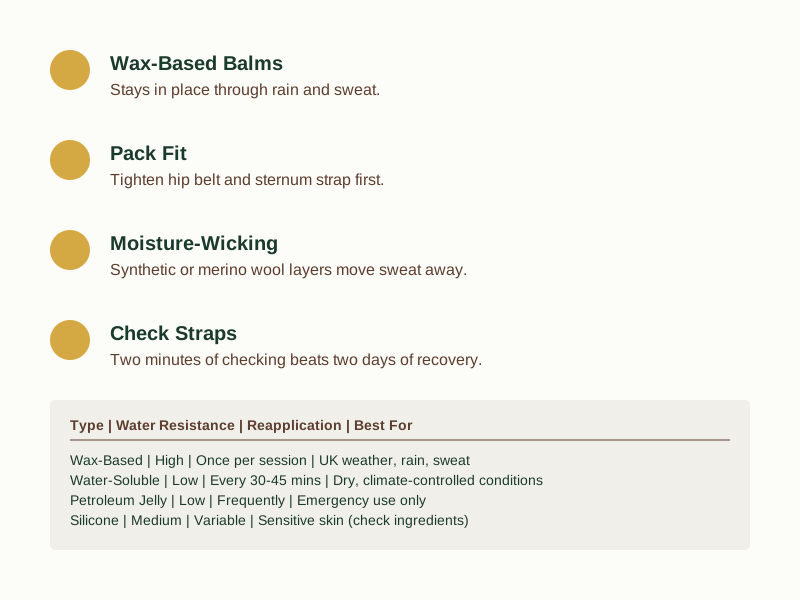
| Type | Water Resistance | Reapplication | Best For |
|---|---|---|---|
| Wax-Based | High | Once per session | UK weather, rain, sweat |
| Water-Soluble | Low | Within the hour | Dry, climate-controlled conditions |
| Petroleum Jelly | High, but wears off with friction | Frequently on long sessions | Emergency/short use only |
| Silicone | Medium | Variable | Sensitive skin (check ingredients) |
Taking the Next Step
Wax-based balms are the more reliable choice for most UK rucking—they hold up in rain and sweat where water-soluble balms wash out early, petroleum jelly wears through under sustained friction, and silicone options really only earn their place if you’re managing sensitive skin. But the product is only half the job. Get the pack fit right and sort your clothing before you reach for the balm at all—those two things prevent more chafing than any product on the market.
If you’re building out your first ruck kit and want to know what else to prioritise, we’ve put together the Free First Ruck Gear Checklist—it covers the essentials without the filler. Questions about specific products or conditions? Get in touch and we’ll work through it.
The Wider Picture
For a complete overview, see our Rucking Troubleshooting: Blisters, Chafing, and Pain Relief guide. The health points above draw on NHS guidance covering blisters, heat rash and skin infections such as cellulitis.
As an Amazon Associate we earn from qualifying purchases. The products linked above are ones we recommend based on independent research and owner feedback.