Adjustable Weighted Vests for UK Rucking: Which Mechanism Actually Lasts?
As an Amazon Associate we earn from qualifying purchases. Some links on this page are affiliate links, which means we may earn a small commission if you make a purchase.
Every weighted vest fails the same way eventually: a strap frays at the load point, a weight packet works loose, or the fit turns a training session into an exercise in constant re-adjustment. What separates a vest still doing its job at month six from one that’s already in the bin isn’t the marketing copy on the listing — it’s the mechanism underneath. UK training conditions are unforgiving on that mechanism specifically. Muddy coastal paths, sudden rain, and three or four loaded sessions a week put sustained stress on stitching, straps, and load pockets that a showroom test never replicates. The complaints that surface from UK buyers who bought on price alone are consistent: fraying straps, leaking weight, awkward fit, and long sessions that get uncomfortable long before the workout is done. The real question isn’t which vest looks toughest on paper. It’s which mechanism actually survives what you’re about to put it through — and whether paying for that survival is worth it for how you actually train.
That’s the framework below: what a vest has to get right structurally, which mechanism wins each job, and an honest read on where your money is well spent versus where it’s paying for margin you’ll never use.
The Three Jobs of a Weighted Vest
Before picking anything, it helps to know what you are actually buying. A weighted vest is a load-carriage tool—it is not a fashion piece, and it is not just a way to add resistance. It has three non-negotiable jobs.
Job 1: Load delivery. The vest needs to add enough weight to genuinely raise your heart rate and stimulate physiological adaptation. If the load shifts, settles, or leaks away during a session, it stops doing this job. Sand-based systems are particularly prone to this.
Job 2: Load distribution. Even weight distribution across the shoulders and torso is what separates a vest from a chest-weighted mess that wrecks your gait. Uneven load creates hot spots, increases fatigue on one side of the body, and can contribute to the kind of joint strain that turns a training session into a physio appointment. A hip belt on a rucksack does this job differently by moving load onto the pelvis, but a vest must achieve it through fit and padding alone.
Job 3: Structural integrity over time. This is where most cheap vests fail. Repeated loading and unloading, sweat, rain, and abrasion from clothing—a vest that frays at the shoulder strap after six weeks of weekly rucks has failed at the one job that matters most for value. Stronger materials, such as denser nylon and reinforced stitching at load points, resist this degradation. Budget vests typically use lighter materials to hit a price point, and that weight saving comes directly from the structural margin you need.
The common mistake buyers make is evaluating a vest on weight capacity alone. A vest that goes up to 20kg sounds impressive until you have used it for a month and the adjustment straps have gone fuzzy and the pockets have started sagging. For context on how much weight you should actually be carrying as you progress, see our guide on how much weight to carry and when to break the rule.
The Verdict: Which Mechanism Wins?
The honest answer isn’t just about which vest is toughest — it’s about which one is worth paying for, given how you actually train. Buy more durability than your training demands and you’ve paid for engineering margin you’ll never call on. Buy less than it demands and you’ll be replacing straps, or the whole vest, well before you meant to. That’s the real comparison.
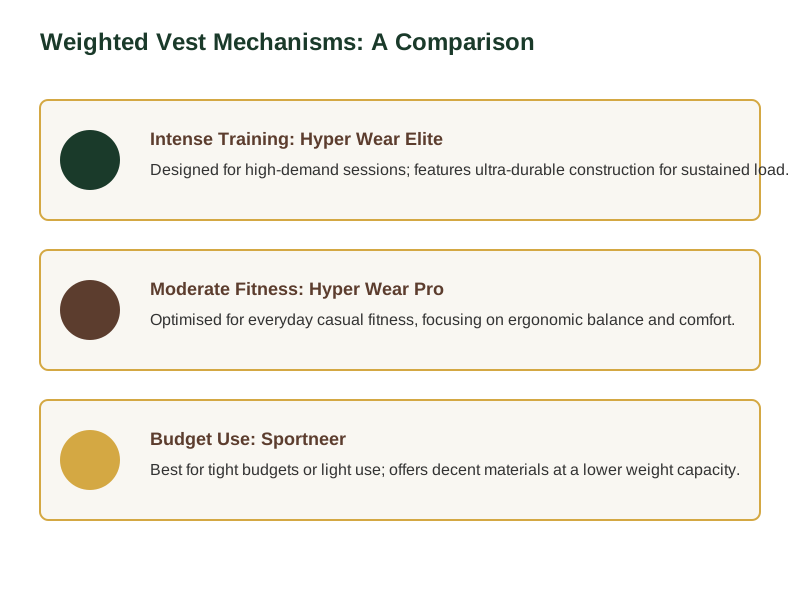
For intense, demanding training — the Hyper Wear Hyper Vest Elite (paid link). This is the pick where failure has real consequences: you are pushing high loads, moving fast, and a strap snapping mid-session or a pocket tearing open on a muddy coastal path is more than an inconvenience. The Elite is built for “intense & demanding training” with “ultra-durable” construction. That engineering commitment matters. If you are rucking with 20kg-plus, doing interval sessions, or training multiple times a week under load, this is the mechanism that won’t quit on you. The ultra-durable label implies resistance to the wear patterns that break lesser vests: repeated high-stress loading, sweat, and abrasion.
View Hyper Wear Hyper Vest Elite on Amazon → (paid link)
For everyday casual fitness — the Hyper Wear Hyper Vest Pro (paid link). The Pro is designed for “everyday casual fitness and moderate intensity” with a focus on comfort and balance. A vest built for comfort under moderate use is a different engineering trade-off than one built for maximum durability. The Pro won’t survive the same abuse as the Elite, but if you are rucking three times a week at moderate weights, you don’t need that extra margin. What you need is a vest that doesn’t chafe, doesn’t shift, and doesn’t make long sessions uncomfortable.
Buy Hyper Wear Hyper Vest Pro on Amazon → (paid link)
Lighter use or a tighter budget points to the Sportneer Adjustable Weighted Vest (paid link) instead. This is the pragmatic pick if your primary goal is longevity without paying premium prices. It’s built to last with decent materials, and while it lacks the “ultra-durable” rating of the Elite, it gives you real mileage without the premium price tag if you’re starting out or rucking twice a week at moderate loads. The trade-off is lower load capacity and less refined comfort under heavy use — expected at this price point, and largely irrelevant if you’re not pushing the vest that hard anyway.
View Sportneer Adjustable Weighted Vest on Amazon → (paid link)
| Mechanism | Best For | Durability Focus |
|---|---|---|
| Hyper Wear Elite | Intense, demanding training | Ultra-durable construction |
| Hyper Wear Pro | Everyday casual fitness | Comfort and balance |
| Sportneer | Tight budgets or light use | Decent materials, lower capacity |
Match the row to your training pattern, not to whichever vest sounds most impressive — the Elite’s extra engineering margin is dead weight on your wallet if you’re only rucking twice a week. For a fuller breakdown of how training stage should shape your gear choices, see our beginner’s guide to rucking in the UK.
Now you know what to look for—Get the Free First Ruck Gear Checklist to compare options against your specific situation.
Why SandBells Are a Trade-Off
SandBells are often mentioned in rucking circles as compacted sand-filled weights that turn into plates for lifting or rucking. The appeal is clear: they are versatile, cheap, and usable for multiple training modalities.
However, the mechanism for rucking is problematic: sand is a granular material. It shifts during movement, creating uneven weight distribution—the opposite of what a vest needs to do. On a walk, this might just feel annoying. On a run or interval session, it can make the load feel top-heavy and affect your balance. Over time, sand also compacts and settles, meaning the weight distribution changes across sessions and requires constant adjustment.
SandBells are a reasonable choice if you want versatility for lifting, but if your primary goal is stable, reliable load carriage for weighted walking or running, they are a trade-off. The granular fill that makes them flexible is the same feature that undermines their load distribution.
Beyond the Vest: Footwear and Blister Prevention
A durable vest is only half the equation. The weight and movement from rucking place serious demand on your feet, and poor footwear turns a solid vest into a blister machine. Load stability and even distribution reduce foot stress compared to a shifting rucksack, but they don’t eliminate it.
📺 Watch: How to avoid & treat blisters - medic from Dragon's Back & Cape Wrath Ultra Nikki Sommers — Wild Ginger Trail & Ultra Running
The key considerations for UK rucking footwear come down to grip, durability, and fit under load. The Inov-8 Trailfly G 270 (paid link) runs Inov-8’s Graphene-Grip outsole — a graphene-enhanced rubber compound the brand developed with University of Manchester researchers and rates at roughly 50% stronger and more hard-wearing than standard rubber — which is a genuine reason it holds grip on wet, muddy coastal paths without the lugs clogging. The Hoka Speedgoat 7 (paid link) is a well-cushioned, capable trail shoe, though it’s built as a trail runner rather than a load-carrying hiking shoe — don’t expect it to feel as reassuring as a proper boot once the pack gets heavy. Merino socks are worth the investment either way, as the moisture management genuinely reduces the hot spots that lead to blisters on longer sessions.
Buy Hoka Speedgoat 7 on Amazon → (paid link)
Buy on Amazon → (paid link)
The link is direct: a vest that distributes load well reduces foot fatigue, but it cannot compensate for footwear that fails under the combined weight of you and the gear over mixed terrain. If you are investing in a quality vest, match it with shoes that can take the load. See our full breakdown of what shoes survive a 20kg ruck in the UK for detailed recommendations.
For UK women using weighted training to support bone health, the Royal Osteoporosis Society and NHS guidance support regular weight-bearing and muscle-strengthening activity, but both advise adapting exercise to your ability and seeking professional guidance if you have osteoporosis or suspect it. A vest is a tool that supports that training; it does not replace the need for appropriate professional advice.
Frequently Asked Questions
How much weight should I start with in a weighted vest?
Start with around 5–10% of your body weight—roughly 4–8kg for most adults—and build from there over weeks, not days. Your body needs time to adapt to the changed gait mechanics and load distribution. If you have any joint concerns or conditions affecting your bones, check with a GP or physio before starting weighted training.
Can I use a weighted vest for running?
Yes, but not every vest is suitable. Running places different demands on a vest: ventilation matters more, the load needs to sit high and close to avoid bouncing, and a vest designed for walking can chafe badly when you are moving faster. Look for a vest specifically rated for running if that is your goal, and start with significantly lower weight than you would use for walking.
Are weighted vests good for bone health?
Weight-bearing exercise is associated with bone health benefits, and the Royal Osteoporosis Society and NHS both recommend regular weight-bearing and muscle-strengthening activity. A weighted vest is one way to add load to walking and movement. The medical guidance on whether it is appropriate for your specific situation—particularly if you have osteoporosis or osteopenia—sits with your GP or a relevant specialist, not with gear recommendations.
Taking the Next Step
None of this changes if you swap brands: match the vest mechanism to your training intensity and frequency, not to whichever spec sheet looks most impressive. If you are training hard and often, the Hyper Wear Elite’s ultra-durable construction earns its price. If you are rucking consistently but at moderate intensity, the Pro gives you balanced comfort without the premium. If you are starting out or training lightly, the Sportneer is the honest budget pick—built to last, without the engineering margin you aren’t using yet.
Whatever you choose, remember that the vest is one part of a system. Footwear matters. Load progression matters. If you are using weighted training to support bone health, professional guidance on your specific situation matters more than any piece of kit.
Confident that you have the framework to make a smart, long-term investment—Get the Free First Ruck Gear Checklist to compare the specific options against your training goals.
Related Guides
For a complete overview, see our GORUCK GR1 vs Budget Rucksacks: What Actually Matters for Rucking in the UK.
Built On
The bone-health guidance above leans on the published positions of the Royal Osteoporosis Society and the NHS, not on gear-review opinion. The outsole claim on the Inov-8 traces back to the brand’s own product engineering.
As an Amazon Associate we earn from qualifying purchases. The products linked above are ones we recommend based on independent research and owner feedback.